Category Archives: Blog Content

Awareness in Women’s freedoms and rights in Afghanistan
By Grade 12 Students Philip Okkels and Mathilde Thal
Despite the prolonged conflict in Afghanistan, there was a seemingly improving economic and social situation before it was halted and completely reversed since the removal of international security forces and rapid Taliban takeover of the former Afghan Government in 2021. Currently, the fundamental and internationally recognized rights and freedoms of all women in Afghanistan are severely limited by the Taliban regime, even after facing gender-based discrimination and violence prior to the takeover.
According to an UNESCO publication, 80% of school-aged Afghan girls and young women, amounting to 2.5 million people, are out of school, with 30% not even entering primary education institutions. The UN considers these issues to not fulfill two of the United Nations Sustainable Development Goals (SGDs) being number 5) Gender Equality and 4) Quality Education.
We spoke with the NGO International Media Support (IMS) organization based here in Copenhagen, Denmark, a journalist support organization having numerous offices across a wide range of countries, and the Danish Afghan Women Forum (DAKDIF). After getting in touch with one of the members, Tahmina Salik, we were invited for both a documentary screening of “In Her Hands” at the UN City, a movie about the story of Zarifa Ghafari who, as a 26 year-old-woman, became one of Afghanistan’s first female mayors and the youngest ever to hold this position. A discussion afterwards with her as a keynote speaker, along with Alison Davidian, UN Women Representative, Afghanistan and Tahmina Salik as Chairperson, DAKDIF and Diaspora Forum.
We highly recommend reading and supporting their cause by reading about their publications, events, conferences, considering a small donation or even discussing this topic with friends and family.
With the privileges that come from being in an international school, we are grateful to have the opportunity to make such a prominent issue in today’s society known to a wider audience. We know that what constitutes the perfect member of CIS is the determination and ambition for volunteering and providing aid for those less fortunate around the world. The issue of the suppression of women in Afghanistan is one that should not be undermined in comparison to greater advertised global issues today. We would like to bring light to it and influence the rest of the CIS community to further contribute to making the position of women in this world a better and safer place.
Thank you for taking your time to read thus far, and we would greatly appreciate all your support to publicize this international and on-going issue to continue giving women all across the world a voice worthy of acknowledgment. Have a great day!
Yours sincerely,
Philip Okkels and Mathilde Thal


The Ultimate Guide on Relocating to Denmark
Picking up your life and moving to another country is no mean feat. Your family might be used to moving from one country to another, as career or personal opportunities open up for you, but that doesn’t make the process any less uprooting. As well as the excitement of embarking on a new adventure, you may be feeling a little daunted by all there is to learn about life in a new place as every country differs slightly from the rest. That’s why we’ve put together this ultimate guide on relocating to Denmark — for families choosing to relocate to this Scandinavian nation. Here we hope to answer all of your questions about getting to Denmark, finding a place to live, choosing the right school for your children and settling into a new community.
Life in Denmark: the basics
- Currency: Danish krone (kr., DKK)
- Population: 5.831 million
- Capital city: Copenhagen
- Time zone: GMT+1
- Emergency number: 112
- Dialing code: +45
- Language: Danish (but many Danes also speak English and German)
- Climate: Average temperatures of 1⁰C in winter and 18⁰C in summer
Denmark is one of the top ten happiest countries in the world. People here enjoy a good work-life balance, that famous “hygge” contentment, and a real sense of inclusivity and equality.
The country is relatively small, so it’s easy to get from the vibrant and architecturally beautiful cities of Copenhagen, Aarhus, and Odense to far-flung islands and pristine beaches.
What else can we say about this wonderful country?
There’s a big focus on sustainability, so you’ll find excellent public transport and safe cycling routes in our cities. The food scene is innovative and exciting. Denmark is incredibly child friendly too, with plenty for kids to do — there are troll forests, fairy tale castles, and the world of LEGO sure to spark their imaginations.
All in all, Denmark offers a modern but peaceful lifestyle, which helps to explain why so many people from around the world choose to make this country their home.
Legal requirements for relocating to Denmark
Let’s get practical. What are the visa requirements for relocating to Denmark?
For Nordic citizens
Nordic citizens do not need a visa or a residency permit to relocate to, work or study in Denmark.
For EU citizens
EU citizens don’t need a visa to enter Denmark. Those planning to live and work in Denmark can do so for up to three months before obtaining a residence document.
Once you have this document, you can stay in Denmark indefinitely as long as you continue living and working in the country.
Once you have lived in Denmark for five years, you can apply for a permanent right of residence.
For non-EU citizens (including Australian, American and British citizens)
It’s a little trickier for non-EU citizens to live, work or study in Denmark.
To do so, you’ll need to apply for a residence permit before you leave your home country. Be sure to apply for the residence permit that matches your circumstances. You can take a look at all of the options here on the Danish immigration service website.
Your residence permit will usually be valid for the duration of your work contract or university course. And when you have a residence permit for work or study in Denmark, your family is entitled to come with you.
After living in Denmark for eight years, you can apply for permanent residency. You may be able to apply for permanent residency earlier — after four years in the country — if you meet four supplementary requirements.
For all expats relocating to Denmark
Once you have your visa and accommodation sorted, you’ll need to book an appointment with the local authorities to get your social security number, known as a CPR. If you are moving to Copenhagen, you can find all the information you need here: If you are moving to another municipality, check on that municipalities website to discover the necessary steps.
A few weeks after registering with the local municipality, you will all receive a health insurance card (also known as “the yellow card”). This card will be your primary documentation while you are in Denmark. It’s used for many aspects of life here and should be kept with you at all times. It also shows that you are entitled to free public healthcare.
When you register for your CPR you will also be asked to set up NEM-ID (which is in the process of changing to MitID). This digital signature is used as a secure identifier online, and you will need it to log on to things like your online bank, or to make any changes to your online digital profile.
It’s very important that you set up your NemID as soon as possible when you get to Denmark as you’ll have to have it to hand when choosing a doctor, setting up a bank account and registering your children at school. You can find out more about NemID here.
Finding a home in Denmark
When you first move to Denmark, it’s much easier to rent than to buy a home. To rent a home, you’ll need to show your Danish residency permit.
The rental market in Denmark is competitive, so it’s a good idea to cast your net as wide as possible.
You can talk to rental brokers like Danish Homes,Find your Home orNordic Housing.
You can conduct your own search online. A few popular property rental sites include:
You might also like to join local Facebook groups and forums that will help to keep you in the loop with available properties.
What should you expect to pay in rent?
Whether you’re planning to rent or buy a home in Denmark, you can expect high prices in big city centers, particularly in Copenhagen.
Prices are generally cheaper if you choose to live in the city outskirts or in a rural area.
You can expect to pay around 20,000-25,000 DKK per month for a three-bedroom apartment in the city center and around 15,000-18,000 DKK for a similar apartment outside the city center.
One important thing to note is that most tenancy agreements require a 3-month deposit, so you should expect to pay a large down-payment upfront when you find the perfect home.
What else can you expect when you rent a home in Denmark?
Tenants are well protected in Denmark. Tenancies tend to last for a minimum of a year and your landlord isn’t allowed to surprise you with unexpected rental price hikes.
Landlords are supposed to inspect the property two weeks before the start of your lease. If they don’t do this, they can’t withhold your deposit at the end of your tenancy. You should also be aware that some contracts stipulate a maintenance fee that a landlord deducts from your deposit.
Important: be sure that any place you rent allows for CPR registration, as there is a limit on how many people can be registered at any one address. Be sure to ask your prospective landlord if you can register your CPR there and for how many people.
Wondering where to stay while you search for your next home? Airbnb has a number of long-term rental solutions you can use as temporary accommodation to help you find your feet.
Education in Denmark
If you’re moving to Denmark as a family, you’ll be keen to find out what education is available for your children.
You’ll be pleased to hear that Denmark has one of the best education systems in the world.
Children in Denmark usually start school during the year in which they turn six. However, if the school and parents are in agreement, children can start school a year earlier than this.
School is compulsory until children reach the age of 16. Once they reach this age, children can move into upper secondary school until they are 19.
Public education
Your children will automatically get a place at the public school associated with your residential address.
However, you have free choice and can choose which primary and lower secondary school you want your children to go to — whether those schools lie inside or outside your school district.
Private schools
There’s a long tradition of private education in Denmark. About 15% of all students attend private school, in part thanks to the government subsidies that make it more affordable.
It generally costs between DKK 1,000 and DKK 2,000 per month to send your child to a private school in Denmark.
You’ll find private independent schools, religious schools, and alternative education schools (like Steiner) in Denmark.
Each private school has its own enrolment process, and there may be a waiting list, so it’s worth contacting the school you are interested in as early as you can.
International schools
Many expats relocating to Denmark choose to send their children to an international school like CIS.
International schools in Denmark teach an international curriculum so it’s easier for your child to transition to education in another country should the need arise.
The majority of international schools in Denmark teach the International Baccalaureate (IB) curriculum. These schools tend to be based in Copenhagen and other big Danish cities, but there’s a good selection across the whole of the country.
At international schools, English is often the primary teaching language. But don’t worry! If you’d like your child to learn Danish, international schools always include this as part of their curriculum too.
You have to pay fees to send your child to an international school in Denmark. But you can count on high standards of learning, small class sizes and excellent facilities.
If you and your family are immigrating to Denmark, take a look at Copenhagen International School (CIS). We offer student-centered and inquiry-based learning, as well as a diverse and caring expat community.
How to open a bank account in Denmark
In Denmark you’ll find typical bricks and mortar banks like Danske Bank, Arbejdernes Landsbank, Nordea and Saxobank. You’ll also find newer, online banks like Lunar.
You can open as many Danish bank accounts as you like, but you may have to pay a fee for them.
As a Danish citizen, you will also be required to have a NemKonto account. Opening this account will establish you in Denmark’s public payment system. NemKonto works just the same as any other bank account — the only difference being that this account is the one you’ll need to be paid in to by a Danish employer or when receiving welfare, tax refunds or other payments from a Danish authority.
To open a bank account in Denmark you need:
- Photo ID, such as your passport. Some banks ask you to provide a notarised copy of this document.
- CPR number. This is the ten-digit ID number given to all residents in Denmark
- Proof of address in Denmark. This can be your health insurance card, a recent utility bill or your rental contract
- For employees: a copy of your employment contract
- For students: proof of your place at university.
Some banks also require a minimum deposit in order to set up an account. It’s worth checking with individual banks so you’re clear on all fees and account requirements.
How to find a job in Denmark
Depending upon your visa requirements, you may be able to enter Denmark without securing an employment contract first.
If you decide to look for a job once you’ve arrived in Denmark, take a look at the following portals:
- Work in Denmark – this website contains insider knowledge about the Danish job market: how to apply for a job in Denmark, what to expect from the recruitment process, Danish workplace culture and practical tips for job seeking, too.
- Graduateland – if you or someone in your family is making their first steps into the world of work, and doing so in Denmark, then Graduate Land is the perfect springboard.
- The Hub – Denmark has a blossoming startup scene, and for the most exciting tech and startup roles, head to The Hub.
English is spoken in the vast majority of Danish offices, although you should be prepared for Danes to speak in Danish among colleagues and then switch to English once you need to be included!
How to make friends in Denmark
We know that moving to a new country can be an unsettling process — both for kids and their parents. Many families worry about feeling isolated without the social networks they relied on where they lived before.
But it’s important to remember that you’re not alone. Many families choose to relocate to Denmark and there’s a thriving expat community.
Families moving to Denmark will find plenty of opportunities for networking and making new friends. You can find Meet-up groups in every Danish city, join a Danish class (where you’re sure to meet other non-locals!) and you can also make the most of the close-knit Copenhagen International School community.
Surround yourself with the wonderful people of Denmark
Here at CIS, we teach children from as far and wide as the US, the UK, India, Australia, Canada, Japan and right across Europe. We also teach lots of Danish students too.
Because we were once newcomers, we know how important it is to create and support our school community — our students and their families — through social events and practical help.
It’s something we’ve taken into the heart of our school ethos. We’re committed to supporting the whole family as they transition to a new life here in Denmark.
Walk around our campus and you’ll see parents stopping by for coffee mornings, fitness classes or just connecting with each other through our proactive and welcoming PTA.
Want to find your Copenhagen community here at CIS? Contact our friendly team today to talk about your move and arrange a virtual tour of our school.
Would you like to join CIS?


The power of play: How Early Years IB education sets solid learning foundations
Play is powerful, but it’s not just about having fun. Play is essential to development and growth, and contributes hugely to a child’s social, emotional, cognitive and physical well-being and development.
In the last three decades, scientific research has shown us that the most crucial time of a person’s life in terms of development is from birth up to age eight. During these vital years, children should be provided with opportunities to learn about the world and explore their environment through play-based learning.
In the International Baccalaureate, play-based learning is integral to the Primary Years Program (PYP) curriculum framework. The curriculum is centered around the idea that children are partners in the learning process. They’re not just passive bystanders, rather they’re integral to and a huge part of their own learning and progress.
But what is play-based learning, and why is it so important that educators incorporate this into the early years curriculum? Let’s take a look.
What do we mean by play-based learning?
Play is intuitive to children and all parents know that being able to play is important to their children’s development. Rarely, however, is play associated with learning – or at least it wasn’t until recent years.
The relationship between play and learning is complex; play-based learning is not just putting toys in a room and leaving children to it. Rather, it promotes the natural inquisitiveness of children and requires experienced educators who facilitate play depending on individual children’s interests, development, and emerging skills.
Playing is how children experience new things in a safe way and in a safe environment: they can cook food, visit the supermarket or drive a car. As a result, they get to explore the world hands-on and develop the skills they need as they age.
There are five main characteristics of play in play-based learning. The play should be:
- Joyful – in other words, children should find the activities fun.
- Meaningful – the play develops a particular skill or set of skills e.g., gross-motor skills, fine motor skills, critical thinking, social interaction, etc.
- Actively engaged – children willfully join in with play and explore new ideas and concepts.
- Socially interactive – children have opportunities to play with peers or adults.
- Iterative – children are encouraged to try things, think creatively, and adapt their play.
What are the benefits of play and creative thinking?
As well as being fun, play-based learning has numerous benefits for children. These include:
Increased self-confidence
Firstly, children develop self-confidence in a huge range of scenarios. Since free play is a key component of play-based learning, children are encouraged to try new things but never forced. So not only do they gain confidence but there is also a reduction in anxiety too.
Reduced stress and anxiety
Play provides joy as well as one-on-one interaction either with a peer or an adult, which can reduce stress. In a world that is constantly changing and evolving, the role of play is significant in children’s lives and can help reduce anxiety when changes occur.
Expand comfort zones
When new and unfamiliar activities are presented to children, they learn to expand their comfort zones. With gentle encouragement or modelling from an educator, a child is encouraged to explore a new way of play. For some children, this might involve taking part in activities like messy play that they are apprehensive about, for example.
Play and inquiry-based learning are also excellent ways of sparking creative thinking in children. When you increase the opportunities for children to think creatively, you encourage divergent thinking. Children are, then, much more open to exploring creative solutions and generating new ideas.
Develop real-world skills
Another benefit of play is that it helps children to build social relationships and practice social skills needed to navigate the world. When they’re in their home environment, they are used to interacting with a parent and perhaps siblings. Play-based learning in an educational setting allows children to navigate working with others that they don’t know as well, which is an essential skill for a developing child.
Finally, research shows there to be strong links between play in the early years and communication skills later. When children are provided with opportunities to engage in pretend play or play that involves negotiating with peers, they have a significant opportunity to enhance and cultivate their social skills.
How play is expressed in the IB
In the International Baccalaureate, play is integral to the Primary Years Program (PYP) curriculum framework. As will the IB in its entirety, the PYP curriculum is centered around the idea that children are partners in the learning process. They’re not just passive bystanders, rather they’re integral to and a huge part of their own learning and progress.
In the PYP, you’ll see teachers providing opportunities for open-ended play with resources and materials that children can use independently. Teachers are the facilitators who encourage play and step in to ask questions that encourage them to develop their thinking, understanding, and strategies.
Children are encouraged to become problem solvers and have ample opportunities to question, wonder, experiment, and play, both alone and collaboratively. Through play-based learning, children can learn, innovate, and inquire each day.
The PYP provides different types of play experiences. These include:
- Free play (entirely child-led)
- Guided play (child-led with adult scaffolding)
- Games (designed by adults and scaffolded, play with set rules/constraints)
- Direct (adult designed and controlled, set constraints)
Overall, the IB method of learning in the early years is highly focused on play-based learning and inquiry-based learning. Teachers facilitate the children’s learning by providing opportunities for different activities and encouraging different play experiences. In short, it is a holistic learning experience that promotes children’s emotional, cognitive, physical, and social development.
How do IB educators foster a playful environment?
When IB educators work with children, they carefully plan their day’s and week’s activities to provide a huge variety of different playful learning experiences. With open-ended materials and unstructured activities, children are engaged in sustained, complex, and rich play each day.
IB educators work hard to create the perfect playful environment for the children. Inclusion is a huge part of the curriculum, and all children are encouraged to join in all activities cooperatively with each other.
There is an emphasis on positive discipline, which teaches children to build a sense of community in the learning environment through the adoption and praise of good behaviour. Educators model positive behaviour and interactions and don’t resort to harmful, punitive discipline methods.
Finally, the learning environment itself is a huge part of fostering a playful environment. At CIS, for example, our IB educators ensure the learning environment offers a variety of spaces where children can flow and take comfort in. There are open spaces, an early years gym, a secure rooftop playground, and a greenhouse that is used for outdoor learning. All learning spaces are open-ended and encourage play-based learning.
Final thoughts on the power of play
Children are naturally inquisitive and by harnessing learning through play, they can develop a solid learning foundation for their future. Ultimately, play is a huge power tool for developing confident, inquisitive lifelong learners.
Here at Copenhagen International School, we foster a child-centred environment where children have time to be curious, ask questions, explore, and experiment. While doing so, they learn valuable social skills and develop their sense of self in a secure environment.
Want to find out more about play-based learning at CIS? Book a tour to speak to one of our friendly members of staff.
Would you like to join CIS?
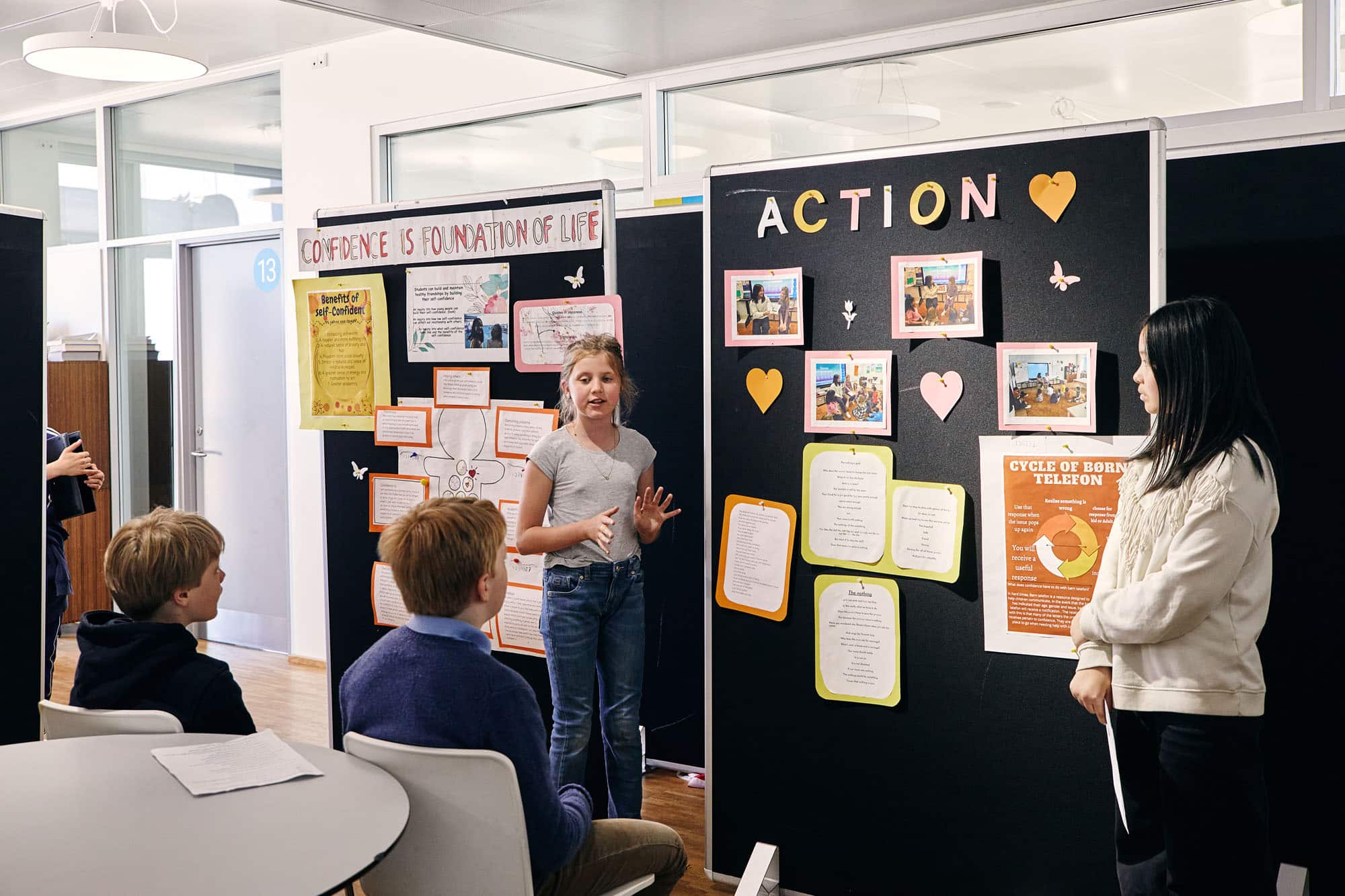
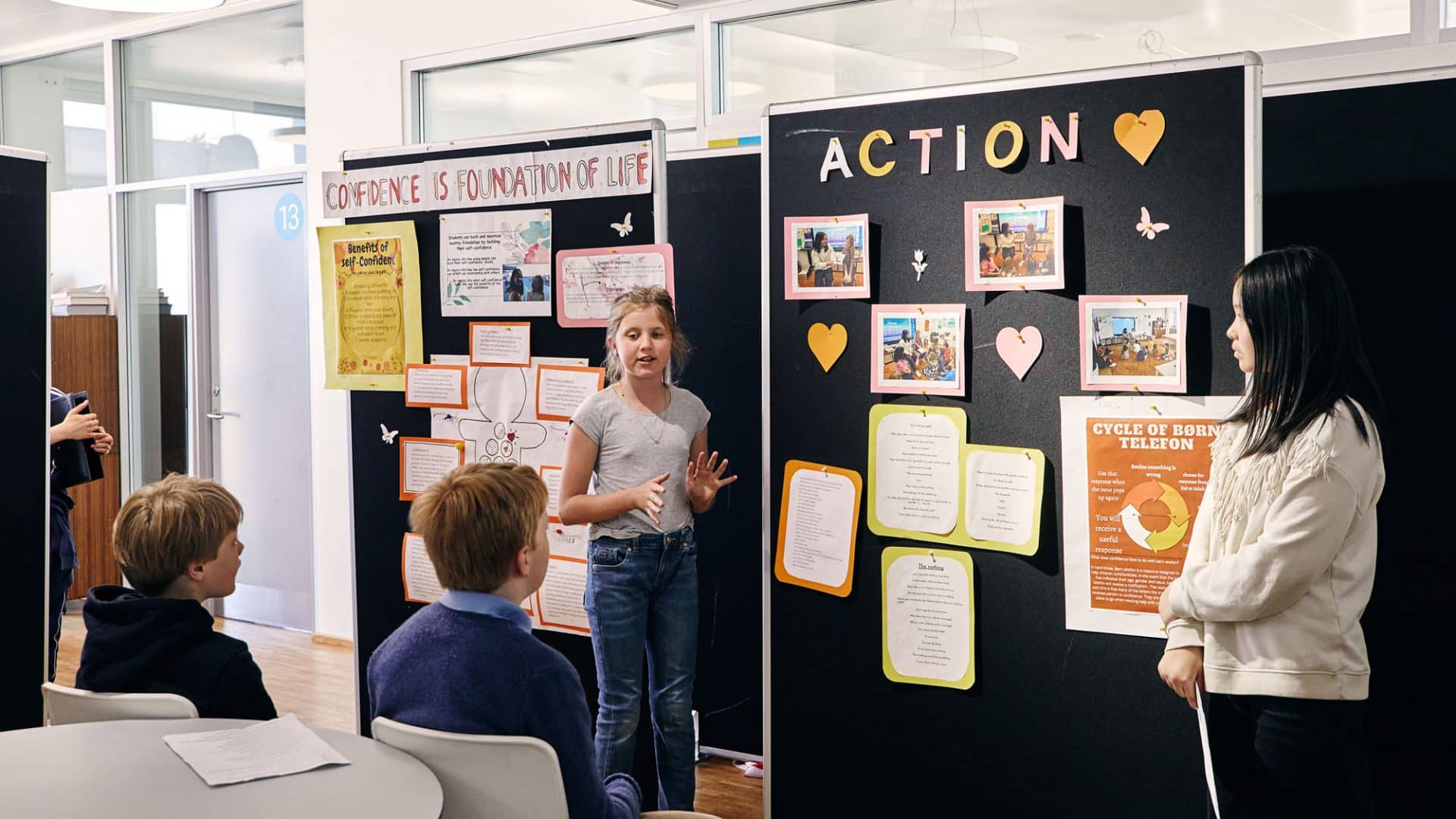
Free thinking: why is it so powerful for students to learn outside the box?
Albert Einstein. Marie Curie. Salvador Dali. Steve Jobs.
These creative, free thinkers pushed boundaries and helped to redefine our understanding of the world.
But creativity isn’t simply about creating something new and unexpected. It’s also a way of learning, thinking and living.
It all starts with learning. Learning outside of the box means learning in an original or creative way. It means nurturing children to become independent thinkers — curious, questioning and innovative.
There are lots of powerful benefits for children who learn in this way. But teachers often find it difficult to teach creativity within the constraints of a traditional curriculum. Nevertheless, some schools and educational programs have successfully made it a founding principle of their teaching.
Let’s start by taking a closer look at creativity and why it’s so important for students.
What is creativity?
Creativity can be a difficult concept to define, especially in the context of a classroom setting.
According to the Cambridge Dictionary: creativity is the ability to produce or use original and unusual ideas.
Creativity means thinking laterally, finding new perspectives and daring to dream up something completely different. It’s about both the process and the product.
For teachers and parents, it’s important to remember that this creativity isn’t the sole reserve of expressive arts subjects — like music, creative writing or visual arts. With the right approach, creativity can be woven into and encouraged in every single lesson a child attends.
Professor Anne Bamford, an internationally-recognised educational researcher and advisor, brings it all back to numbers.
“If you ask what’s three plus three? the answer is always six,” says Bamford. “But if you ask what is six? you’re turning the task around. You’re encouraging a way of thinking that goes beyond the subject.”
Because the answer could be two plus four. Or seven minus one. It could be the half a dozen eggs you need to make a pavlova. It could be anything!
Why is creativity important to development?
Creativity is important at every stage of development. It helps children to become confident communicators, thinkers and learners — both at school and beyond.
However, it’s particularly important in early childhood, when the neuroplasticity of the brain makes it easy to build new pathways.
Children who are encouraged to develop their creative thinking skills at this stage build an excellent foundation for creative thought in later life.
So why is creativity important to development? Creativity helps children to:
- Express their emotions. This makes it easier for them to build and maintain relationships with the people around them.
- Get to know themselves better. Through exploration and experimentation, students get to know their interests and passions.
- Make connections between one area of learning and another. This gives students the context they need to understand the real world relevance of their classroom subjects and improve academic performance across the board.
- Learn perseverance. Creative learning involves taking risks and making mistakes; with no clearly defined solution, children have to keep trying, learning the value of perseverance in the process.
- Deal with ambiguity. Creative thinkers are better able to cope with and navigate gray areas (both at school and in later life).
- Develop critical thinking and problem solving skills. Children learn how to question assumptions and look for new perspectives, which helps them to overcome challenges.
- Go beyond prescribed limits. When children are encouraged to explore their own ideas, without being subjected to rigid rules and instructions, they develop the curiosity and motivation to think outside of the box.
These skills have never been more important. Today’s children will be entering a workforce (and a society) that will be radically different from the one we know today.
With the help of technology, we already have information at our fingertips. AI will soon be able to complete a wide variety of tasks that have been previously emphasized in the classroom.
Creativity, rather than knowledge, will be the key to success. Giving students the skills to manipulate knowledge, find connections and innovate will future-proof them long beyond their school careers.
It also sets them up for a life of self-fulfillment — with the ability to create, forge a path for themselves and enjoy lifelong learning.
How is creativity incorporated into the curriculum?
It’s important to equip children with creative thinking skills during their time at school. But in practice, it’s not always easy for educators to incorporate creativity into a set curriculum.
Overcoming this difficulty means:
- Defining creative skills in a way that is relevant to the educational setting
- Providing teachers with the guidance and tools they need to encourage creative skills in students
- Finding appropriate ways to measure achievement
Here at Copenhagen International School, creativity is embedded in the curriculum. We offer all of our students the following:
A compassionate environment
Creative learning is only possible when children feel accepted for who they are. Here at CIS, children are comfortable sharing their ideas. They think creatively and take creative risks, without any fear of failure or judgment.
A creative environment
In the early years, we created dynamic environments that support play, exploration and discovery. All of our classrooms are inspiring, engaging and flexible spaces that encourage creative collaboration between students.
Inquiry-led learning
Students at CIS never learn by rote. Instead, our teachers encourage inquiry and autonomy. We strive to provide the right balance of structure and creative freedom for each child and each learning experience.
Holistic learning
In the IB program, students explore the same themes (or areas of inquiry) across all subject areas. Science is incorporated into an art class, literature into geography, math into physical education.
This transdisciplinary approach makes for more creative learning experiences. It also supports children to develop a better all-round understanding of concepts.
Want to find out more about inquiry-based, creative learning?
Children who develop their creative-thinking skills are better equipped for the world beyond the classroom.
Here at Copenhagen International School, we teach the International Baccalaureate curriculum. It’s a broad, challenging and creative program that supports students to become well-rounded learners.
We also provide a warm, welcoming community for international students and their families.
Want to find out more about inquiry-based learning at CIS? Book a tour to speak to one of our friendly members of staff.
Would you like to join CIS?

A comprehensive guide to the International Baccalaureate
There are many benefits to the International Baccalaureate programme. But if your only experience is with traditional or public education systems, a potential switch to IB can bring up plenty of questions. In this comprehensive guide, we’ll try to answer all of those queries — and more. We’ll look at how the International Baccalaureate qualification works, the pros of the programme and how to find the right IB school for your family.
What is IB – International Baccalaureate?
The International Baccalaureate is a non-profit organisation whereby schools sign up to a franchise network to access the IB services like branding, publications, and assessments. IB schools, therefore, are franchises of this non-profit organisation and they must be certified in order to deliver the curriculum.
The International Baccalaureate is taught in more than 140 countries in either French, Spanish, or English. There are four different IB educational programmes:
- The IB Primary Years Programme (PYP) – suitable for children between the ages of 3 and 12.
- The IB Middle Years Programme (MYP) – for students between the ages of 11 and 16.
- IB Diploma Programme – aimed at young people between the ages of 15 and 19.
- The IB Career-related Programme – to prepare children for their next steps post-schooling (open to students in their last two years of secondary school).
The history of the IB
The International Baccalaureate was founded by teachers in 1968, using the writings of Marie-Thérèse Maurette, a pioneer of International Education, as a core ethos. It was her piece entitled ‘Educational Techniques for Peace. Do They Exist?’ from 1948 that kick-started the efforts to create what we now know as the International Baccalaureate or IB.
Copenhagen International School (CIS) is an International Baccalaureate World School that offers all three International Baccalaureate Programmes to its students: IB Primary Years, IB Middle Years and the IB Diploma. Our school was one of the founding IB schools and so has a long and successful history in delivering this framework.
The first programme offered was the IB Diploma Programme with the other programmes arriving much later (the MYP in 1994, and the PYP in 1996).
What does the IB program consist of today?
As previously mentioned, there are four branches of the IB Programme. In this section, we’ll go through each one in detail.
The IB Primary Years Programme (PYP)
From age 3 right up to age 12, the PYP aims to develop children to be both culturally aware and caring. There is a strong emphasis on learners being active participants in their education and learning.
Through the PYP, learners are encouraged to take ownership and responsibility of their own learning and be reflective. They develop their knowledge, skills, and conceptual understandings in order to make a difference both in their own lives and beyond.
The IB Middle Years Programme (MYP)
The MYP covers five years of education. It is a challenging programme where students are encouraged to link their studies with the outside world. In order for the MYP to be broad and balanced, there are eight subject groups.
The eight subject groups student in the IB MYP include:
- Language acquisition
- Language and literature
- Individuals and societies
- Sciences
- Mathematics
- Arts
- Physical and health education
- Design.
For the final two years of the five-year programme, when the student is around 14 years old, these choices can be narrowed down to six of the eight subject groups.
Compared to other curriculums for this age group, the IB MYP is designed to be taught in context so students can relate their learning to real-world experiences. The idea of global contexts and concepts are explored deeply, so learners develop an idea of common humanity and responsibility.
The IB Diploma Programme (DP)
Next, an IB student will go through the IB Diploma Programme. At this stage, the aim is to develop learners to flourish emotionally, intellectually, ethically and physically.
This is the programme that students follow between the ages of 16 and 19. Many go on to university courses after completing the IB Diploma Programme.
The curriculum is divided into six subject groups as well as the DP core.
The six subject groups include:
- Language acquisition
- Studies in language and literature
- Individuals and societies
- Sciences
- The arts
- Mathematics
And the three core elements are:
- TOK: theory of knowledge
- CAS: creativity, activity, service — a project relating to the three concepts
- An extended essay: a self-directed research project culminating in a 4,000-word essay.
Students do have an element of choice in their subject groups and there are two levels for each subject. These are standard level (SL) or higher level (HL). Students take three or four HL subjects and the rest as SL subjects.
As most people are interested in the IB DP, let’s look in more detail at the subject groups.
Language Acquisition
It is in this group where students can choose to study a modern language course, whether as a beginner or as a prior learner. At Copenhagen International School, students learn Danish and are taught in English as standard, so that both languages develop.
Language and Literature
Students can choose literature, language and literature, or literature and performance (though this is only available to Standard Level).
Individuals and Societies
This subject group covers topics that help students understand the world around them. Business management, digital society, economics, global politics and information technology in a global society all feature. As do history, geography, philosophy, social and cultural anthropology, and world religions.
Sciences
In the Sciences subject group, students can learn biology, chemistry, computer science, design technology, environmental systems and societies, physics, and sports, exercise and health science.
The arts
The arts subject group includes dance, film, music, theatre, and visual arts.
The IB Career-related Programme (CP)
While the DP focuses more on academia and access to university, the CP is a separate programme that focuses on access to apprenticeships and employment as well as further/higher education.
Students who take on the CP, take on at least two IB Diploma Programme courses with four components. They also do a career-related study. Essentially, the CP prepares students with real-world approaches to learning.
How does the IB compare with other curriculums?
Studies show that IB students in the PYP and MYP typically outperform non-IB peers in reading, mathematics and writing. What’s more, these students are more able to cope with the expectations and rigour of college.
For older students, research also shows that IB students are more globally minded than their peers in other non-IB schools in different countries.
Common questions about IB
How long is an International Baccalaureate?
When people talk about the IB, they usually mean the diploma programme. This programme is two years long.
The PYP, on the other hand, covers ten years, and the MYP covers five years.
CIS offers a full continuum curriculumcurriculm spanning all programmes, from ages 3-18.
What is the International Baccalaureate equivalent to?
The IB Diploma compares to the UK equivalent of A-Levels, France’s Baccalauréat, or Spain’s Bachillerato — it’s the qualification taken at the end of secondary education before entering university.
Grade-wise, an IB grade of 33 (the average) is equivalent to 3 UK A-Levels at B grade, a European Baccalaureate at 74/75, and an Access Diploma at 70. In the Danish system, this would equate to 8,5.
The difference in results is that the IB final grade score is the total sum of all of the grades. In comparison, the French Baccalauréate (and similarly the Swiss Maturité) results show the average grade achieved in all subjects taken.
Can you transition from IB schools into local schools?
Transferring from an IB school to a local Danish school is possible. Here is a conversion scale that shows what IB points are worth.
Can students get into university and college with an IB certificate?
Yes! The IB is a world-class education that prepares students well for university life. Lots of universities already collaborate with the IB programme. Typically, universities expect the IB holder to have at least 18 points, with 3 points minimum per subject.
4 benefits of the IB (and what sort of results can you expect)
From its inception over fifty years ago, the IB has aimed to develop learners to be committed to helping and respecting themselves, others, and the wider world.
Here are the benefits of an IB education in more detail.
1. A student-led approach
The IB programme is learner-centric. It helps students to become:
- Knowledgeable
- Inquirers
- Reflective
- Good communicators
- Open-minded
- Caring
- Risk-takers
- Balanced
- Thinkers
The IB places an emphasis on self-inquiry and creativity. It encourages students to be in charge of their own learning and prepares them well for life beyond school and education.
2. A holistic approach
The IB programme offers a holistic approach to learning and education. It takes a much broader view of what learning and education should be about. It doesn’t just focus on core subjects like language skills and mathematics, but it also develops other skills like empathy, problem-solving, and a growth mindset.
3. International recognition
The clue is in its name! The International Baccalaureate is an internationally-recognised qualification. There are already more than 140 countries worldwide where the IB is offered, which means people with an IB qualification have lots of opportunities wherever they wish to go.
For parents, getting children on an IB programme means they’re free to move around without too much disruption to their child’s education and learning. Whether in the Armed Forces or other transferable roles, a child studying an IB in Denmark, for example, will easily be able to transition to an IB school in Germany with minimal disruption.
4. A strong global community network
The basis of the IB is to develop learners into world citizens — people who are open-minded and inclusive. With these characteristics developed in students, it’s no surprise that IB students and schools have a strong sense of community spirit.
This community spirit is something that CIS really works hard to achieve and maintain — not just for students, but for their entire families. There are parent-specific community benefits here too, including exercise classes. Don’t be surprised if you pass a sports hall that’s entirely full of parents taking part in an exercise class! CIS places a strong emphasis on community and prides itself on helping the whole family settle into their new life in Copenhagen.
5. Real-world situations
With its broad and balanced framework and its connected and conceptual philosophy, the IB develops analytical and critical-thinking skills that students will need for real-life situations. The learning is based on the real world, which makes it more interesting for students and helps them link their learning with relevant real-world examples.
6. Academic results
Of course, students (and their parents) want to trust in the academic potential of any education system. The good news is the that International Baccalaureate Diploma Programme has a pass rate of 88.96%.
There are over 170,000 students each year who achieve this qualification and their average diploma score is around 33, with each grade averaging 5.19. At CIS, our students’ diploma results remain consistently above the world average of 30 points. Almost every year, several of our students score above 40 points — an exceptional achievement.
How to find the right IB school for your family
International Baccalaureate schools were traditionally designed for learners whose parents travelled for work: diplomates, businesspeople, Armed Forces families, and so on. Nowadays, however, more and more families are choosing an IB school simply because of the rigorous education on offer, as well as their focus on community and the wider world.
The International Baccalaureate website has a dedicated page to finding an IB school. It lists all schools in the world that offer the IB. You can also choose to narrow down your search with keywords, the language of instruction, boarding facilities, gender, the programmes offered, and whether you want a state school or a private school.
When choosing a school, you need to bear in mind some of the following things:
Accreditation
No matter which IB school you choose, it will have to be accredited. There are certain requirements that schools need to meet in order to be an authorised IB school and the process is not easy.
IB world schools (as they’re known) are required to work closely with a consultant before being accredited. They have to submit a candidacy application, which outlines their commitment to upholding the IB standards. They also need to submit documentation including legal information and a budget breakdown. There is a fee to apply, too.
While going through the candidacy process, there are several remote visits as well as site visits. At the end of this period, the IB team prepares a detailed report. This states how prepared the school is to become an IB world school.
When the school is ready, they apply to become an authorised school. There is a final verification visit and a comprehensive report on its findings. If all is as expected and to standard, the authorisation is finalised.
The point is, when you select an IB-accredited school, you know that it has undergone a rigorous process to be accepted onto the IB programme.
Websites
When conducting research about which IB school is best for your child, you’ll need to explore their website — and social media, too! Check out their calendar of events and look out for extra things like sports, extra-curricular activities, parents’ meetings, etc. Visiting the website will give you a feel for the school before you visit it, especially if there are virtual tours to explore too.
School culture
Academics aside, you need to look at the school’s culture, philosophy and vision. As the IB is designed to develop students to be reflective and community-oriented, it’s important that this is developed in the wider school culture too.
For IB schools in Denmark, why not read more about what Copenhagen International School has to offer. As one of the founding IB schools, CIS has a wealth of experience and knowledge and we pride ourselves on being one, big community.
Start your family’s IB journey today
The International Baccalaureate has a long and impressive history and is well-established throughout the world and especially at Copenhagen International School. The reasons why the IB was initially created are still relevant today, if not more so, and that’s just one of the reasons why many parents choose this option for their children.
If you’ve got questions about the IB programme at CIS, how it works and what to expect when you join the CIS community, then get in touch with Lena Donde or Taj Seth Mand, our admissions coordinators, today.