

Picking up your life and moving to another country is no mean feat. Your family might be used to moving from one country to another, as career or personal opportunities open up for you, but that doesn’t make the process any less uprooting. As well as the excitement of embarking on a new adventure, you may be feeling a little daunted by all there is to learn about life in a new place as every country differs slightly from the rest. That’s why we’ve put together this ultimate guide on relocating to Denmark — for families choosing to relocate to this Scandinavian nation. Here we hope to answer all of your questions about getting to Denmark, finding a place to live, choosing the right school for your children and settling into a new community.
Denmark is one of the top ten happiest countries in the world. People here enjoy a good work-life balance, that famous “hygge” contentment, and a real sense of inclusivity and equality.
The country is relatively small, so it’s easy to get from the vibrant and architecturally beautiful cities of Copenhagen, Aarhus, and Odense to far-flung islands and pristine beaches.
What else can we say about this wonderful country?
There’s a big focus on sustainability, so you’ll find excellent public transport and safe cycling routes in our cities. The food scene is innovative and exciting. Denmark is incredibly child friendly too, with plenty for kids to do — there are troll forests, fairy tale castles, and the world of LEGO sure to spark their imaginations.
All in all, Denmark offers a modern but peaceful lifestyle, which helps to explain why so many people from around the world choose to make this country their home.
Let’s get practical. What are the visa requirements for relocating to Denmark?
Nordic citizens do not need a visa or a residency permit to relocate to, work or study in Denmark.
EU citizens don’t need a visa to enter Denmark. Those planning to live and work in Denmark can do so for up to three months before obtaining a residence document.
Once you have this document, you can stay in Denmark indefinitely as long as you continue living and working in the country.
Once you have lived in Denmark for five years, you can apply for a permanent right of residence.
It’s a little trickier for non-EU citizens to live, work or study in Denmark.
To do so, you’ll need to apply for a residence permit before you leave your home country. Be sure to apply for the residence permit that matches your circumstances. You can take a look at all of the options here on the Danish immigration service website.
Your residence permit will usually be valid for the duration of your work contract or university course. And when you have a residence permit for work or study in Denmark, your family is entitled to come with you.
After living in Denmark for eight years, you can apply for permanent residency. You may be able to apply for permanent residency earlier — after four years in the country — if you meet four supplementary requirements.
Once you have your visa and accommodation sorted, you’ll need to book an appointment with the local authorities to get your social security number, known as a CPR. If you are moving to Copenhagen, you can find all the information you need here: If you are moving to another municipality, check on that municipalities website to discover the necessary steps.
A few weeks after registering with the local municipality, you will all receive a health insurance card (also known as “the yellow card”). This card will be your primary documentation while you are in Denmark. It’s used for many aspects of life here and should be kept with you at all times. It also shows that you are entitled to free public healthcare.
When you register for your CPR you will also be asked to set up NEM-ID (which is in the process of changing to MitID). This digital signature is used as a secure identifier online, and you will need it to log on to things like your online bank, or to make any changes to your online digital profile.
It’s very important that you set up your NemID as soon as possible when you get to Denmark as you’ll have to have it to hand when choosing a doctor, setting up a bank account and registering your children at school. You can find out more about NemID here.
When you first move to Denmark, it’s much easier to rent than to buy a home. To rent a home, you’ll need to show your Danish residency permit.
The rental market in Denmark is competitive, so it’s a good idea to cast your net as wide as possible.
You can talk to rental brokers like Danish Homes,Find your Home orNordic Housing.
You can conduct your own search online. A few popular property rental sites include:
You might also like to join local Facebook groups and forums that will help to keep you in the loop with available properties.
Whether you’re planning to rent or buy a home in Denmark, you can expect high prices in big city centers, particularly in Copenhagen.
Prices are generally cheaper if you choose to live in the city outskirts or in a rural area.
You can expect to pay around 20,000-25,000 DKK per month for a three-bedroom apartment in the city center and around 15,000-18,000 DKK for a similar apartment outside the city center.
One important thing to note is that most tenancy agreements require a 3-month deposit, so you should expect to pay a large down-payment upfront when you find the perfect home.
Tenants are well protected in Denmark. Tenancies tend to last for a minimum of a year and your landlord isn’t allowed to surprise you with unexpected rental price hikes.
Landlords are supposed to inspect the property two weeks before the start of your lease. If they don’t do this, they can’t withhold your deposit at the end of your tenancy. You should also be aware that some contracts stipulate a maintenance fee that a landlord deducts from your deposit.
Important: be sure that any place you rent allows for CPR registration, as there is a limit on how many people can be registered at any one address. Be sure to ask your prospective landlord if you can register your CPR there and for how many people.
Wondering where to stay while you search for your next home? Airbnb has a number of long-term rental solutions you can use as temporary accommodation to help you find your feet.
If you’re moving to Denmark as a family, you’ll be keen to find out what education is available for your children.
You’ll be pleased to hear that Denmark has one of the best education systems in the world.
Children in Denmark usually start school during the year in which they turn six. However, if the school and parents are in agreement, children can start school a year earlier than this.
School is compulsory until children reach the age of 16. Once they reach this age, children can move into upper secondary school until they are 19.
Your children will automatically get a place at the public school associated with your residential address.
However, you have free choice and can choose which primary and lower secondary school you want your children to go to — whether those schools lie inside or outside your school district.
There’s a long tradition of private education in Denmark. About 15% of all students attend private school, in part thanks to the government subsidies that make it more affordable.
It generally costs between DKK 1,000 and DKK 2,000 per month to send your child to a private school in Denmark.
You’ll find private independent schools, religious schools, and alternative education schools (like Steiner) in Denmark.
Each private school has its own enrolment process, and there may be a waiting list, so it’s worth contacting the school you are interested in as early as you can.
Many expats relocating to Denmark choose to send their children to an international school like CIS.
International schools in Denmark teach an international curriculum so it’s easier for your child to transition to education in another country should the need arise.
The majority of international schools in Denmark teach the International Baccalaureate (IB) curriculum. These schools tend to be based in Copenhagen and other big Danish cities, but there’s a good selection across the whole of the country.
At international schools, English is often the primary teaching language. But don’t worry! If you’d like your child to learn Danish, international schools always include this as part of their curriculum too.
You have to pay fees to send your child to an international school in Denmark. But you can count on high standards of learning, small class sizes and excellent facilities.
If you and your family are immigrating to Denmark, take a look at Copenhagen International School (CIS). We offer student-centered and inquiry-based learning, as well as a diverse and caring expat community.
In Denmark you’ll find typical bricks and mortar banks like Danske Bank, Arbejdernes Landsbank, Nordea and Saxobank. You’ll also find newer, online banks like Lunar.
You can open as many Danish bank accounts as you like, but you may have to pay a fee for them.
As a Danish citizen, you will also be required to have a NemKonto account. Opening this account will establish you in Denmark’s public payment system. NemKonto works just the same as any other bank account — the only difference being that this account is the one you’ll need to be paid in to by a Danish employer or when receiving welfare, tax refunds or other payments from a Danish authority.
To open a bank account in Denmark you need:
Some banks also require a minimum deposit in order to set up an account. It’s worth checking with individual banks so you’re clear on all fees and account requirements.
Depending upon your visa requirements, you may be able to enter Denmark without securing an employment contract first.
If you decide to look for a job once you’ve arrived in Denmark, take a look at the following portals:
English is spoken in the vast majority of Danish offices, although you should be prepared for Danes to speak in Danish among colleagues and then switch to English once you need to be included!
We know that moving to a new country can be an unsettling process — both for kids and their parents. Many families worry about feeling isolated without the social networks they relied on where they lived before.
But it’s important to remember that you’re not alone. Many families choose to relocate to Denmark and there’s a thriving expat community.
Families moving to Denmark will find plenty of opportunities for networking and making new friends. You can find Meet-up groups in every Danish city, join a Danish class (where you’re sure to meet other non-locals!) and you can also make the most of the close-knit Copenhagen International School community.
Here at CIS, we teach children from as far and wide as the US, the UK, India, Australia, Canada, Japan and right across Europe. We also teach lots of Danish students too.
Because we were once newcomers, we know how important it is to create and support our school community — our students and their families — through social events and practical help.
It’s something we’ve taken into the heart of our school ethos. We’re committed to supporting the whole family as they transition to a new life here in Denmark.
Walk around our campus and you’ll see parents stopping by for coffee mornings, fitness classes or just connecting with each other through our proactive and welcoming PTA.
Want to find your Copenhagen community here at CIS? Contact our friendly team today to talk about your move and arrange a virtual tour of our school.


Play is powerful, but it’s not just about having fun. Play is essential to development and growth, and contributes hugely to a child’s social, emotional, cognitive and physical well-being and development.
In the last three decades, scientific research has shown us that the most crucial time of a person’s life in terms of development is from birth up to age eight. During these vital years, children should be provided with opportunities to learn about the world and explore their environment through play-based learning.
In the International Baccalaureate, play-based learning is integral to the Primary Years Program (PYP) curriculum framework. The curriculum is centered around the idea that children are partners in the learning process. They’re not just passive bystanders, rather they’re integral to and a huge part of their own learning and progress.
But what is play-based learning, and why is it so important that educators incorporate this into the early years curriculum? Let’s take a look.
Play is intuitive to children and all parents know that being able to play is important to their children’s development. Rarely, however, is play associated with learning – or at least it wasn’t until recent years.
The relationship between play and learning is complex; play-based learning is not just putting toys in a room and leaving children to it. Rather, it promotes the natural inquisitiveness of children and requires experienced educators who facilitate play depending on individual children’s interests, development, and emerging skills.
Playing is how children experience new things in a safe way and in a safe environment: they can cook food, visit the supermarket or drive a car. As a result, they get to explore the world hands-on and develop the skills they need as they age.
There are five main characteristics of play in play-based learning. The play should be:
As well as being fun, play-based learning has numerous benefits for children. These include:
Firstly, children develop self-confidence in a huge range of scenarios. Since free play is a key component of play-based learning, children are encouraged to try new things but never forced. So not only do they gain confidence but there is also a reduction in anxiety too.
Play provides joy as well as one-on-one interaction either with a peer or an adult, which can reduce stress. In a world that is constantly changing and evolving, the role of play is significant in children’s lives and can help reduce anxiety when changes occur.
When new and unfamiliar activities are presented to children, they learn to expand their comfort zones. With gentle encouragement or modelling from an educator, a child is encouraged to explore a new way of play. For some children, this might involve taking part in activities like messy play that they are apprehensive about, for example.
Play and inquiry-based learning are also excellent ways of sparking creative thinking in children. When you increase the opportunities for children to think creatively, you encourage divergent thinking. Children are, then, much more open to exploring creative solutions and generating new ideas.
Another benefit of play is that it helps children to build social relationships and practice social skills needed to navigate the world. When they’re in their home environment, they are used to interacting with a parent and perhaps siblings. Play-based learning in an educational setting allows children to navigate working with others that they don’t know as well, which is an essential skill for a developing child.
Finally, research shows there to be strong links between play in the early years and communication skills later. When children are provided with opportunities to engage in pretend play or play that involves negotiating with peers, they have a significant opportunity to enhance and cultivate their social skills.
In the International Baccalaureate, play is integral to the Primary Years Program (PYP) curriculum framework. As will the IB in its entirety, the PYP curriculum is centered around the idea that children are partners in the learning process. They’re not just passive bystanders, rather they’re integral to and a huge part of their own learning and progress.
In the PYP, you’ll see teachers providing opportunities for open-ended play with resources and materials that children can use independently. Teachers are the facilitators who encourage play and step in to ask questions that encourage them to develop their thinking, understanding, and strategies.
Children are encouraged to become problem solvers and have ample opportunities to question, wonder, experiment, and play, both alone and collaboratively. Through play-based learning, children can learn, innovate, and inquire each day.
The PYP provides different types of play experiences. These include:
Overall, the IB method of learning in the early years is highly focused on play-based learning and inquiry-based learning. Teachers facilitate the children’s learning by providing opportunities for different activities and encouraging different play experiences. In short, it is a holistic learning experience that promotes children’s emotional, cognitive, physical, and social development.
When IB educators work with children, they carefully plan their day’s and week’s activities to provide a huge variety of different playful learning experiences. With open-ended materials and unstructured activities, children are engaged in sustained, complex, and rich play each day.
IB educators work hard to create the perfect playful environment for the children. Inclusion is a huge part of the curriculum, and all children are encouraged to join in all activities cooperatively with each other.
There is an emphasis on positive discipline, which teaches children to build a sense of community in the learning environment through the adoption and praise of good behaviour. Educators model positive behaviour and interactions and don’t resort to harmful, punitive discipline methods.
Finally, the learning environment itself is a huge part of fostering a playful environment. At CIS, for example, our IB educators ensure the learning environment offers a variety of spaces where children can flow and take comfort in. There are open spaces, an early years gym, a secure rooftop playground, and a greenhouse that is used for outdoor learning. All learning spaces are open-ended and encourage play-based learning.
Children are naturally inquisitive and by harnessing learning through play, they can develop a solid learning foundation for their future. Ultimately, play is a huge power tool for developing confident, inquisitive lifelong learners.
Here at Copenhagen International School, we foster a child-centred environment where children have time to be curious, ask questions, explore, and experiment. While doing so, they learn valuable social skills and develop their sense of self in a secure environment.
Want to find out more about play-based learning at CIS? Book a tour to speak to one of our friendly members of staff.
Albert Einstein. Marie Curie. Salvador Dali. Steve Jobs.
These creative, free thinkers pushed boundaries and helped to redefine our understanding of the world.
But creativity isn’t simply about creating something new and unexpected. It’s also a way of learning, thinking and living.
It all starts with learning. Learning outside of the box means learning in an original or creative way. It means nurturing children to become independent thinkers — curious, questioning and innovative.
There are lots of powerful benefits for children who learn in this way. But teachers often find it difficult to teach creativity within the constraints of a traditional curriculum. Nevertheless, some schools and educational programs have successfully made it a founding principle of their teaching.
Let’s start by taking a closer look at creativity and why it’s so important for students.
Creativity can be a difficult concept to define, especially in the context of a classroom setting.
According to the Cambridge Dictionary: creativity is the ability to produce or use original and unusual ideas.
Creativity means thinking laterally, finding new perspectives and daring to dream up something completely different. It’s about both the process and the product.
For teachers and parents, it’s important to remember that this creativity isn’t the sole reserve of expressive arts subjects — like music, creative writing or visual arts. With the right approach, creativity can be woven into and encouraged in every single lesson a child attends.
Professor Anne Bamford, an internationally-recognised educational researcher and advisor, brings it all back to numbers.
“If you ask what’s three plus three? the answer is always six,” says Bamford. “But if you ask what is six? you’re turning the task around. You’re encouraging a way of thinking that goes beyond the subject.”
Because the answer could be two plus four. Or seven minus one. It could be the half a dozen eggs you need to make a pavlova. It could be anything!
Creativity is important at every stage of development. It helps children to become confident communicators, thinkers and learners — both at school and beyond.
However, it’s particularly important in early childhood, when the neuroplasticity of the brain makes it easy to build new pathways.
Children who are encouraged to develop their creative thinking skills at this stage build an excellent foundation for creative thought in later life.
So why is creativity important to development? Creativity helps children to:
These skills have never been more important. Today’s children will be entering a workforce (and a society) that will be radically different from the one we know today.
With the help of technology, we already have information at our fingertips. AI will soon be able to complete a wide variety of tasks that have been previously emphasized in the classroom.
Creativity, rather than knowledge, will be the key to success. Giving students the skills to manipulate knowledge, find connections and innovate will future-proof them long beyond their school careers.
It also sets them up for a life of self-fulfillment — with the ability to create, forge a path for themselves and enjoy lifelong learning.
It’s important to equip children with creative thinking skills during their time at school. But in practice, it’s not always easy for educators to incorporate creativity into a set curriculum.
Overcoming this difficulty means:
Here at Copenhagen International School, creativity is embedded in the curriculum. We offer all of our students the following:
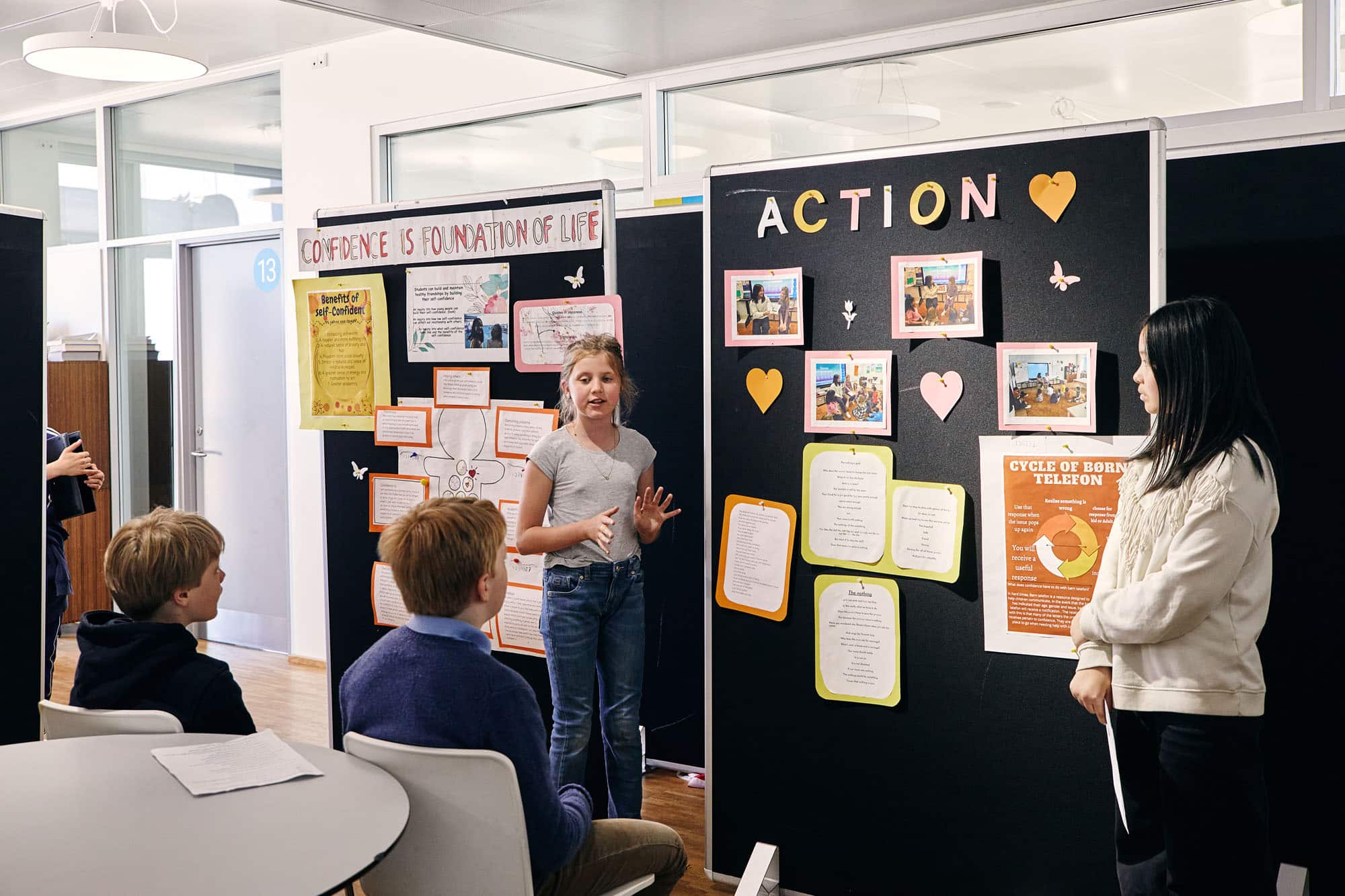
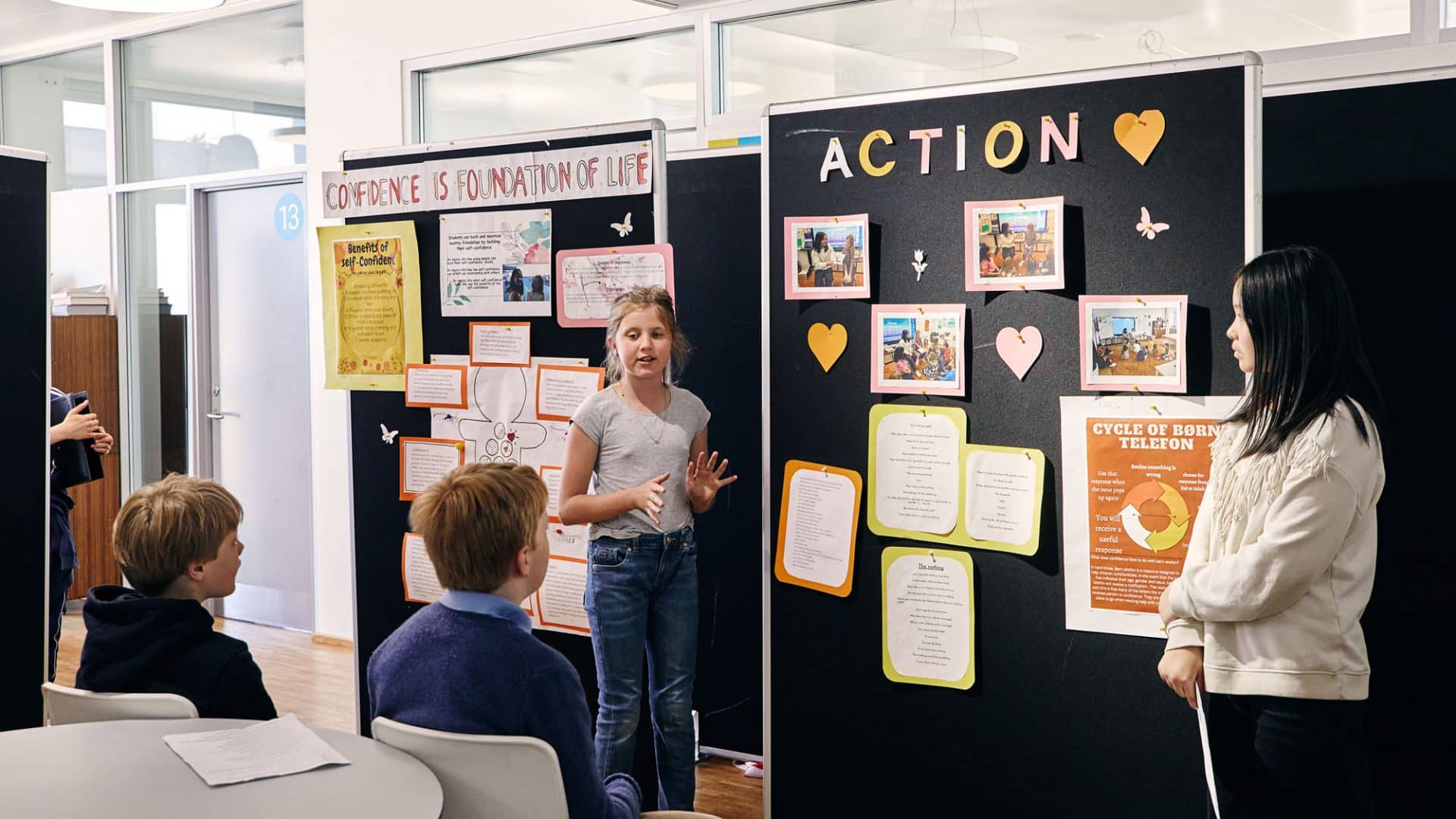
Creative learning is only possible when children feel accepted for who they are. Here at CIS, children are comfortable sharing their ideas. They think creatively and take creative risks, without any fear of failure or judgment.
In the early years, we created dynamic environments that support play, exploration and discovery. All of our classrooms are inspiring, engaging and flexible spaces that encourage creative collaboration between students.
Students at CIS never learn by rote. Instead, our teachers encourage inquiry and autonomy. We strive to provide the right balance of structure and creative freedom for each child and each learning experience.
In the IB program, students explore the same themes (or areas of inquiry) across all subject areas. Science is incorporated into an art class, literature into geography, math into physical education.
This transdisciplinary approach makes for more creative learning experiences. It also supports children to develop a better all-round understanding of concepts.
Children who develop their creative-thinking skills are better equipped for the world beyond the classroom.
Here at Copenhagen International School, we teach the International Baccalaureate curriculum. It’s a broad, challenging and creative program that supports students to become well-rounded learners.
We also provide a warm, welcoming community for international students and their families.
Want to find out more about inquiry-based learning at CIS? Book a tour to speak to one of our friendly members of staff.
| Cookie | Duration | Description |
|---|---|---|
| cookielawinfo-checkbox-analytics | 11 months | This cookie is set by GDPR Cookie Consent plugin. The cookie is used to store the user consent for the cookies in the category "Analytics". |
| cookielawinfo-checkbox-functional | 11 months | The cookie is set by GDPR cookie consent to record the user consent for the cookies in the category "Functional". |
| cookielawinfo-checkbox-necessary | 11 months | This cookie is set by GDPR Cookie Consent plugin. The cookies is used to store the user consent for the cookies in the category "Necessary". |
| cookielawinfo-checkbox-others | 11 months | This cookie is set by GDPR Cookie Consent plugin. The cookie is used to store the user consent for the cookies in the category "Other. |
| cookielawinfo-checkbox-performance | 11 months | This cookie is set by GDPR Cookie Consent plugin. The cookie is used to store the user consent for the cookies in the category "Performance". |
| viewed_cookie_policy | 11 months | The cookie is set by the GDPR Cookie Consent plugin and is used to store whether or not user has consented to the use of cookies. It does not store any personal data. |


