Category Archives: Alumni


An unexpected path to astrophysics
An unexpected path into astrophysics has led CIS Class of 2020 graduate Leilei Reinosuke Kusano to research black holes and the mysteries of gravity. In this Q&A, he reflects on how the IB prepared him for research, his love of music and the sense of belonging he still feels when returning to CIS.
When did you realise that astrophysics was something you wanted to study at university?
When I started my Master of Physics degree in 2020 at the University of St Andrews in theoretical physics, I actually didn’t have my sights set on astronomy or astrophysics at all. In this respect, I stumbled onto astrophysics almost by accident.
As our CIS Class of 2020 cohort finished our IB in the middle of the Covid pandemic, I completed the first few years of my university degree online from Denmark, doing research in materials science on the side. When I finally got to attend university in person, I was quite desperate to gain some research experience with the faculty as well. A field that many of my peers were interested in, which influenced my decision quite a bit, happened to be in observational astrophysics.
Having done a summer internship in 2024 on high-energy astrophysics, I realised that I really enjoyed doing physics research. In this respect, I didn’t really even know if astrophysics was my thing until recently. Now, together with theoretical gravitational physics, it forms one of my two main pillars of research.

What did you study at CIS that helped prepare you for astrophysics?
During the IB program at CIS, I did Mathematics, Physics, Chemistry, and English Language/Literature at Higher Level, while also doing History and German B at Standard Level.
Naturally, I would say that the STEM subjects (math, physics, chemistry) were essential in building up my basic toolkit that I use in conducting my research. Aside from the topical relevance, they also trained my mental stamina a lot. These subjects no longer deal with trivial problems at the high school/IB level, so you have to get used to sitting and thinking about one given problem for a long period of time. This is a crucial skill especially in research. As a researcher, you are doing something that nobody else has done before, and you have to come up with the explanations to your results by yourself. Doing the IAs was also great fun, especially when supervised by teachers like Fred, Mr Boulton, and Mr McIntyre.
I was really lucky to learn from some great teachers (Ms Prisk, Ms Nyiendo, Frau Reichert, Ms Donnellan) that good structure and clarity is essential.
Leilei Kusano
The skills that I gained from my other subjects (English, history, German B, Theory of Knowledge) play a crucial part in my current work too. When doing research in STEM, publishing results and communicating their significance to the broader scientific community is very important. It’s really easy to write a paper that nobody else understands, which is a fact that a lot of researchers seem to overlook! Good communication of any form should elucidate rather than obfuscate, and I was really lucky to learn from some great teachers (Ms Prisk, Ms Nyiendo, Frau Reichert, Ms Donnellan) that good structure and clarity is essential.
I think the IB program is exemplary in this regard. It aims to develop students holistically, through allowing them to interact with a multitude of different areas and hone many different types of skills throughout the two years of their degree.
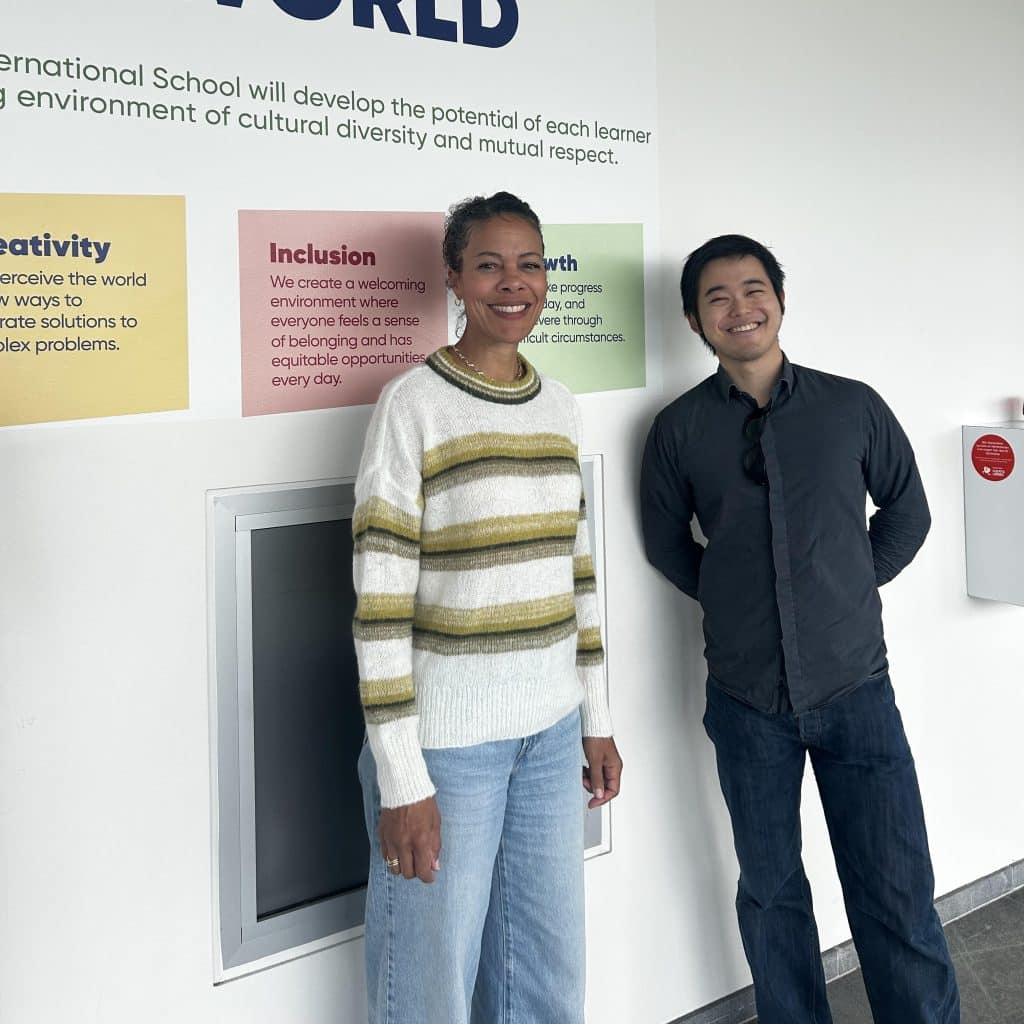
For someone who doesn’t know much about astrophysics, how would you describe what you actually study? And where do you hope to be in 5 years time?
The tagline that I use to describe my research is “Compact objects at all scales”. More specifically, I mainly work on black holes and other such objects from both theoretical and observational perspectives.
Newton’s gravity and Einstein’s theory of relativity work well at the scales of planetary and solar systems. However, once we zoom out to galaxies and the greater cosmos, or focus in on (sub)atomic levels, we encounter some issues with our gravitational theories for which we require some additional ingredients.
My research explores some possibilities to fill these gaps, and discusses what happens when we rely on other theories or make large assumptions about the underlying physics. For example, a lot of my recent work has concerned the possibilities for different black hole structures arising in alternate gravity theories. I also work on a theoretical model wherein quantum particles trap themselves in their own gravitational potential. It’s speculative research, but it is a lot of fun!
On a more observational front, I work on active galactic nuclei (AGN), which host the supermassive black holes at the centres of galaxies. Since we can’t image most of these supermassive black holes directly as they’re often too far away for our telescopes, we instead look at how light near these objects echoes across space to understand the structures of their environments.
As for what I’d be doing in five years’ time, hopefully I’ll be finishing a PhD, either in astrophysics, mathematical physics, or theoretical physics.
You were a wonderful violinist during your high school years, performing both as a soloist in concerts and as part of various ensembles. Have you managed to keep your love of the violin and music alive since leaving CIS?
Many thanks! I did have many great memories playing at CIS, and receiving many kind words of encouragement from members of faculty (Ms Donnellan, Ms Prisk, Ms Wykes, Mr Boulton, Mr Howard, to name a few). The charity club concert that we did in spring 2019 with the Danish opera singers, organised by Frau Reichert and Ms Faircloth, will always hold a special place in my heart.
I am afraid I no longer play much violin. I suffered an injury in autumn 2020 which unfortunately became kind of chronic. I did play on-and-off from 2022 to 2023, but then I just got too busy with university studies. My violin teacher passed away in early 2025, which also made it harder for me to pick the instrument back up.
I am fortunate that some people are still willing to hear me play. While I was at St Andrews, I had the opportunity to professionally record some newly-made violins for a local luthier (Alan McGeoch) who was kind enough to let me loan those instruments for free. I do still have a big love for music, so I hope to get back to more musicmaking soon!
After you graduate, do be sure to go back and visit CIS; the staff would love to have you back, even if just for a chat.
Leilei Kusano
Any advice for current IB students?
Study hard, but also remember to enjoy yourselves once in a while! Be sure to make many great memories.
The IB is difficult, but it is a very rewarding program. Each class is a class you will likely never experience again, so ensure that each moment of your time in the IB is as rewarding and fulfilling as can be.
After you graduate, do be sure to go back and visit CIS; the staff would love to have you back, even if just for a chat.
When you do visit, remember to take in CIS’s aquamarine-tinted solar cells paneling the walls and its towers reflected in the water of the canal. You would be surprised at how quickly that sense of belonging and homesickness comes flooding back, in remembrance of the many amazing experiences that you have had there. At least it surprises me, every time.

From CIS student to CIS board member
Surin Lee, recent graduate of Class of 2026, has joined the Copenhagen International School Board of Governors as its newest member. Read more below.
You graduated from CIS just last year and have now joined the school’s Board. What inspired you to take on this role?
My primary motive was to stay connected to the CIS community. I’m very fortunate to say that I have enjoyed my years as a student of CIS. When I graduated, it was a bittersweet feeling: happy to be done, but nostalgic for the memories I shared. Naturally, a part of me wondered if there was a way to give back and contribute to the CIS community. So, when I was offered the role, I was glad to accept it. Also, Chris (Director) and Kate’s (Board Chair) warm welcome made the transition so easy.
How does your experience as a recent CIS graduate influence the way you approach your role on the Board?
As a recent CIS graduate, I’d describe my approach as “passionate”. Having spent 6 years under the influence of decisions made at the board level, whether realising it or not, I understand how much weight rests on what a select few decide. That said, I want to be intentional about ensuring my presence nudges decisions towards what’s best for the students. Not just as any student, but as a CIS student. I believe whilst you can take the girl out of CIS, you can’t take CIS out of the girl. I like to think I still embody the soul of a CIS student. So, I want to work to ensure CIS students’ well-being and growth.
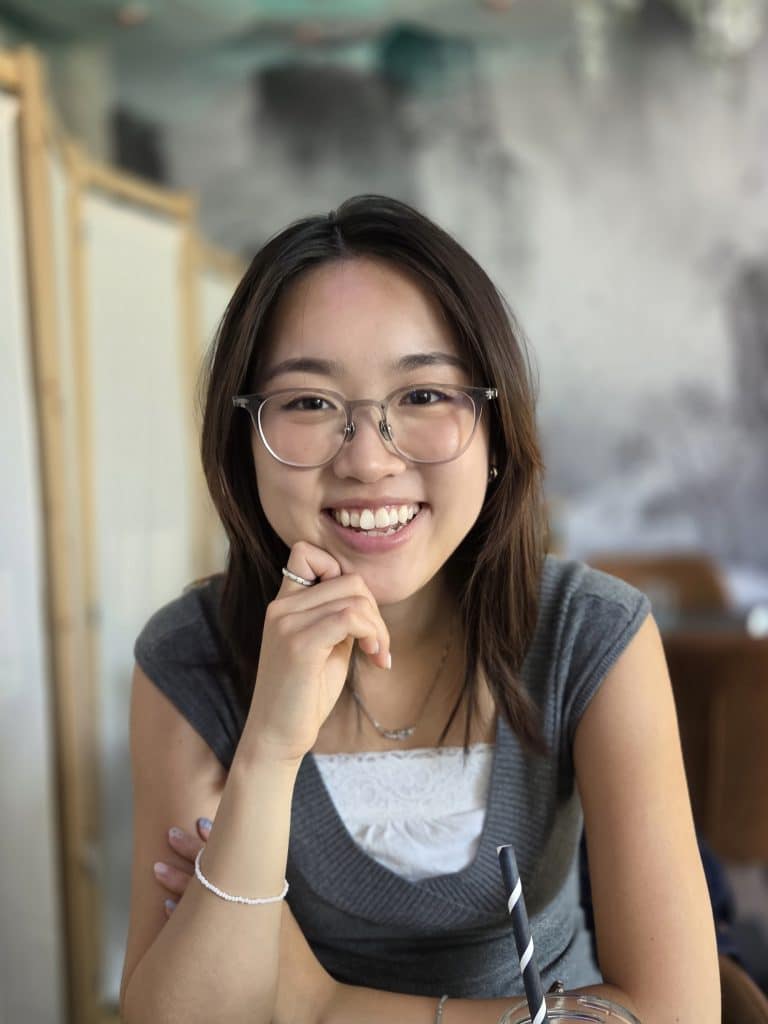
Having experienced CIS as a student, what do you think makes the school and its community special?
I think the care that goes into students and their well-being, embedded in every part of the school, sets CIS apart. From the warm welcome from Chris, to nutritious canteen meals, student-focused teaching, sea-view classrooms, clean and safe facilities, and mental health counselling, the list goes on. The carefully curated design is truly reflected in the students, and the wider community.
What are you most looking forward to contributing to or learning through your role on the Board?
I am most looking forward to learning from the intelligent, articulate, thoughtful people, whom I get to refer to as fellow board members. I want to see, from the front row, how decisions get made at the board level and how they trickle down into student life. Whilst as a student I did not have much autonomy in administration, rightfully so, as a student representative of legal age, I am excited to contribute as a student voice. I would like to learn and observe how my actions can carry an impact at an administrative level, and behind-the-scenes.
If you could give one piece of advice to current CIS students, what would it be?
That is quite a wide range. I am envisioning anyone from the small, adorable Pre-K students to the hard-working, slightly-stressed DP students. Whilst I’d love to picture every face I’m addressing, I will pretend that it is to myself, when I was a CIS student: Make the best use of the institution and the resources around you. Don’t stress about the grades, but focus on whether you are growing. Don’t be afraid to speak up, and still make a difference exactly where you are. Take a walk around the harbour after lunch. And be kind to each other because kindness will eventually circle back to you. You got this!
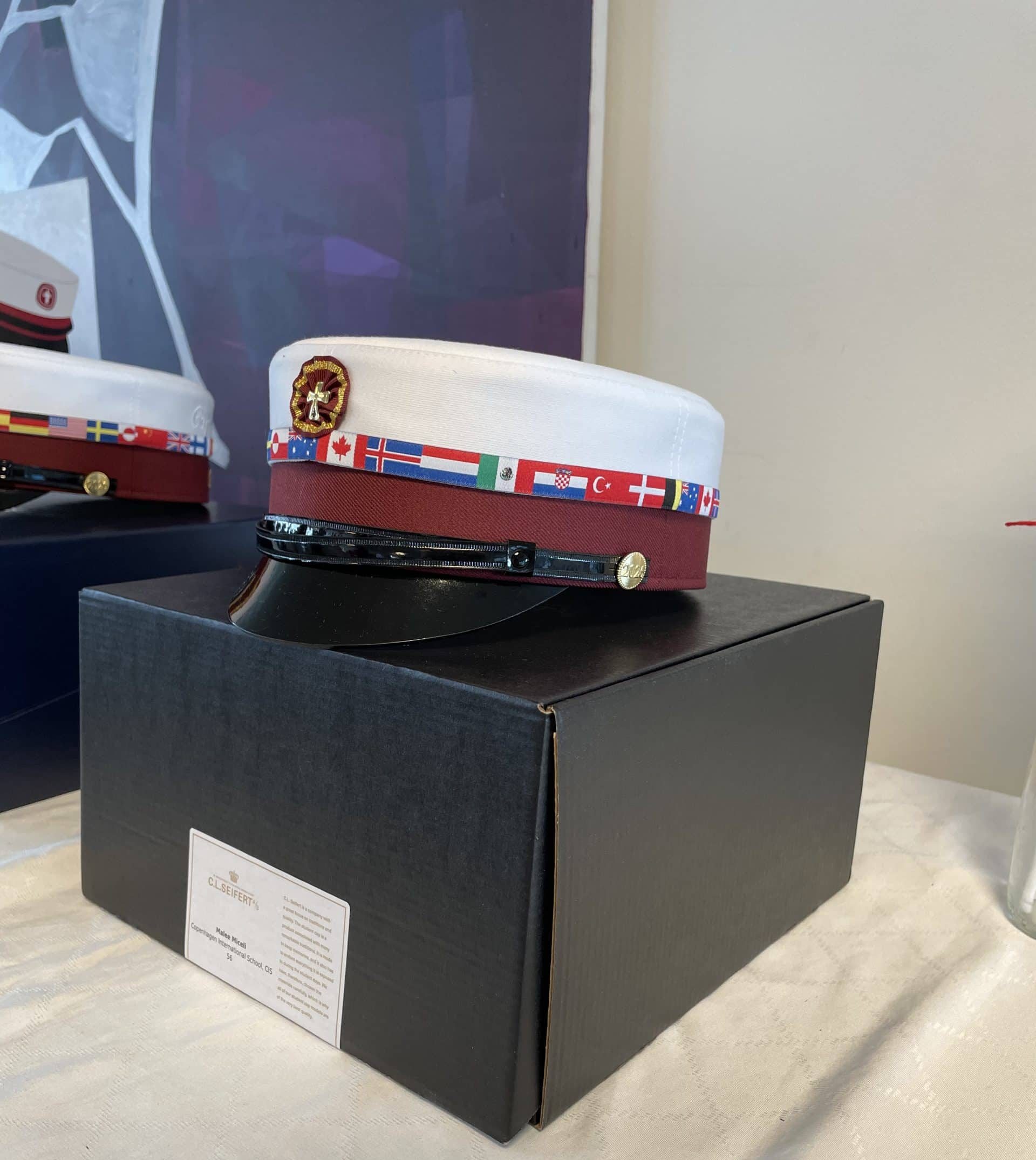
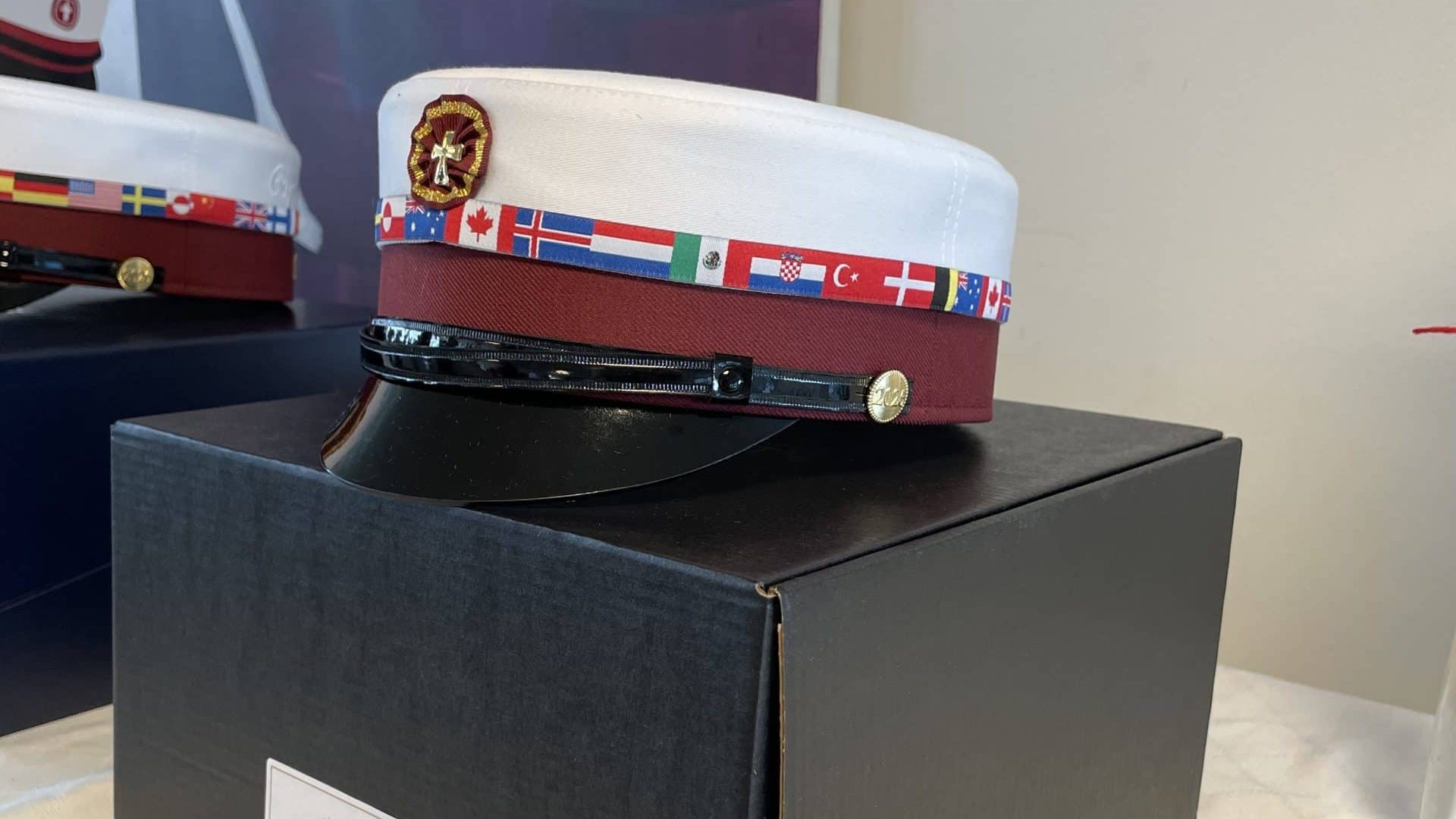
Class of 2022: Two Paths, Many Possibilities
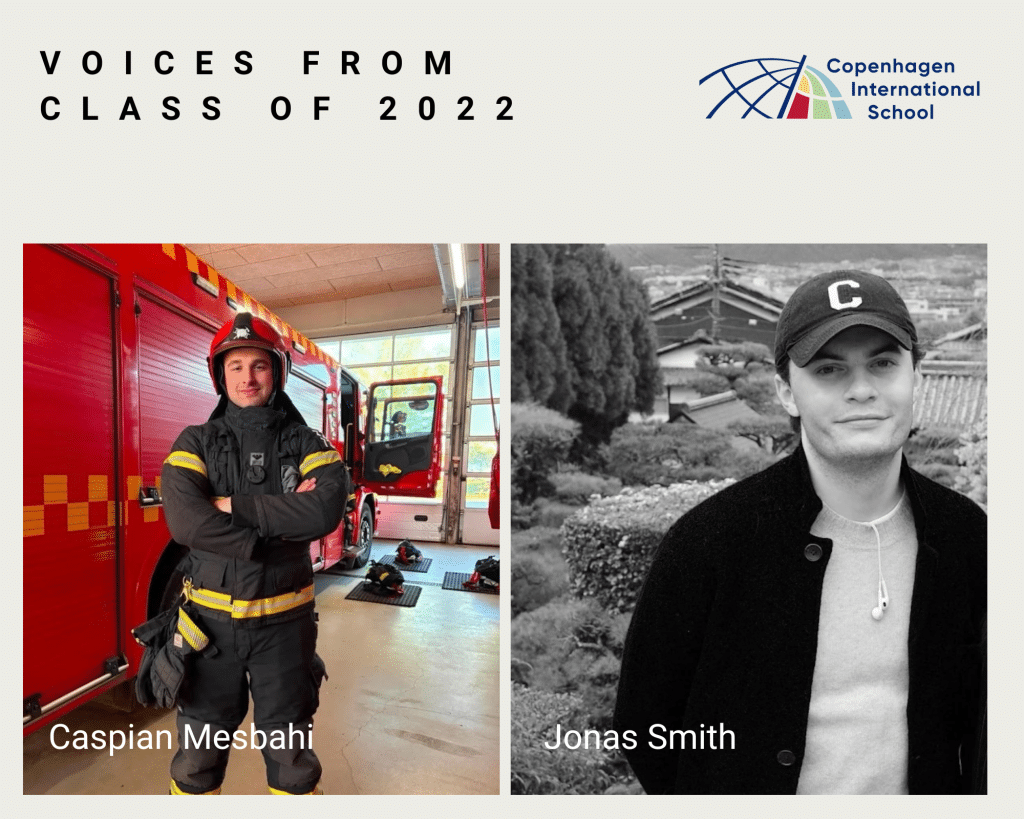
Since graduating from CIS in 2022, former students Jonas Smith and Caspian Mesbahi have taken very different routes, showing just how many directions life after CIS can lead.
Jonas moved to Savannah, Georgia, to study graphic design at the Savannah College of Art and Design. He describes how his passion for the arts was shaped during CIS art classes, where he was challenged to explore new techniques and ways of thinking. What began as a nervous step into university became an exciting journey filled with international internships in Denmark, Switzerland, and London, as well as collaborative projects with companies such as Deloitte, La Mer, and EA. Looking back, he credits the IB programme with building the discipline and work ethic that carried him forward, and encourages current students to slow down and enjoy the moment.
The IB programme, despite its intensity, prepared me exceptionally well. It strengthened my work ethic and instilled habits I still rely on today.
Jonas Smith
FUN FACT:
Caspian and Jonas actually go way back. The two attended preschool together at Sunrise in Hellerup before going their separate ways. Years later, they unexpectedly reunited at CIS, where they eventually graduated together. A small world, and a fun full-circle moment.
At the same time, Caspian’s path took a very different direction. After graduation, he explored several options before joining the Civil Defence and training in firefighting and rescue. Today, he works at Novo Nordisk as a Coordinating Leader for Falck and serves as a Crew Commander at local fire stations. He also founded Valcorv, a software company developing systems for emergency services, built directly from his hands-on experience in the field. Alongside this work, he has studied engineering at DTU. He reflects that leadership, responsibility, and variety have shaped his path, and encourages students to try something challenging to discover what fits.
For those who are unsure about their future after CIS: Pick something new and hard, even if it seems random, like the fire department. Best case, you find something you enjoy, as I did. Alternatively, you find out what you don’t want, which forces you to think about what you would rather do.
Caspian Mesbahi
Together, their stories highlight a shared message: there is no single path after CIS. Whether through creativity, engineering, leadership, or entrepreneurship, graduates go on to shape their own directions in very different ways.

Career advice from a former student
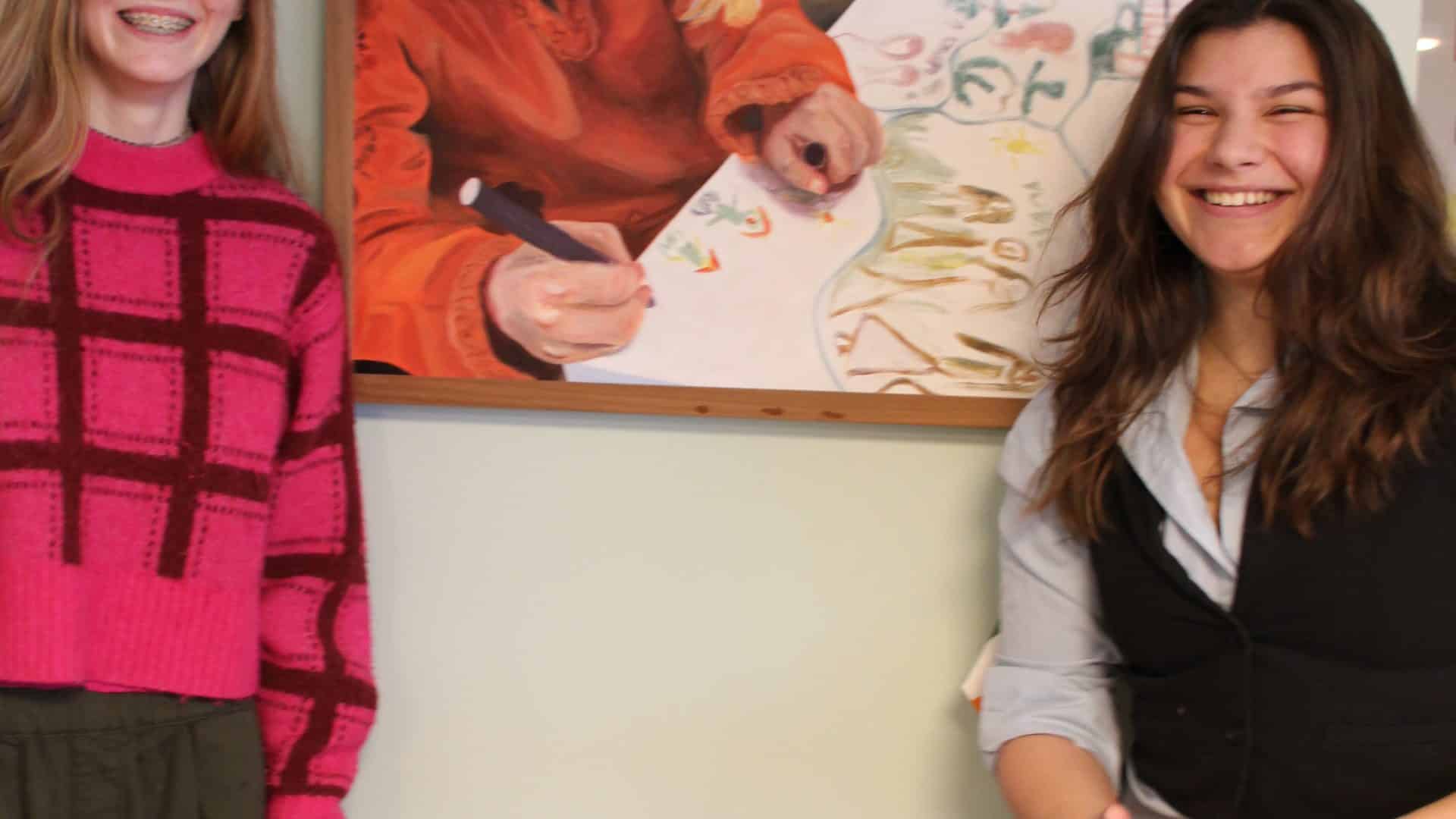
Alexandra Hundal Christiansen (Class of 2020) and Millie McNulty (Class of 2026) come together to discuss their shared passion for architecture and the uncertainty of the world they are living in. Alexandra, currently completing her master’s degree at (IE University (Instituto de Empresa), offers Millie insight into the realities of student life today. She speaks candidly about her hopes for her twenties, which often revolve around simple survival amid rising inflation, increasing rent, and food costs. Alexandra reflects on the ongoing challenge of pursuing her dream of becoming an architect while relying on having a number of part-time positions in the service industry to make ends meet.
Together, they also discuss the importance of building connections within the architectural profession, acknowledging that success in the field still often comes down to “not what you know, but who you know.”
They reflect on how networking, mentorship, and informal relationships can open doors to opportunities that are not always accessible through talent or academic achievement alone. Both recognise that while skill and dedication are essential, navigating the industry often requires guidance, visibility, and the support of established professionals.