PYP Assessment
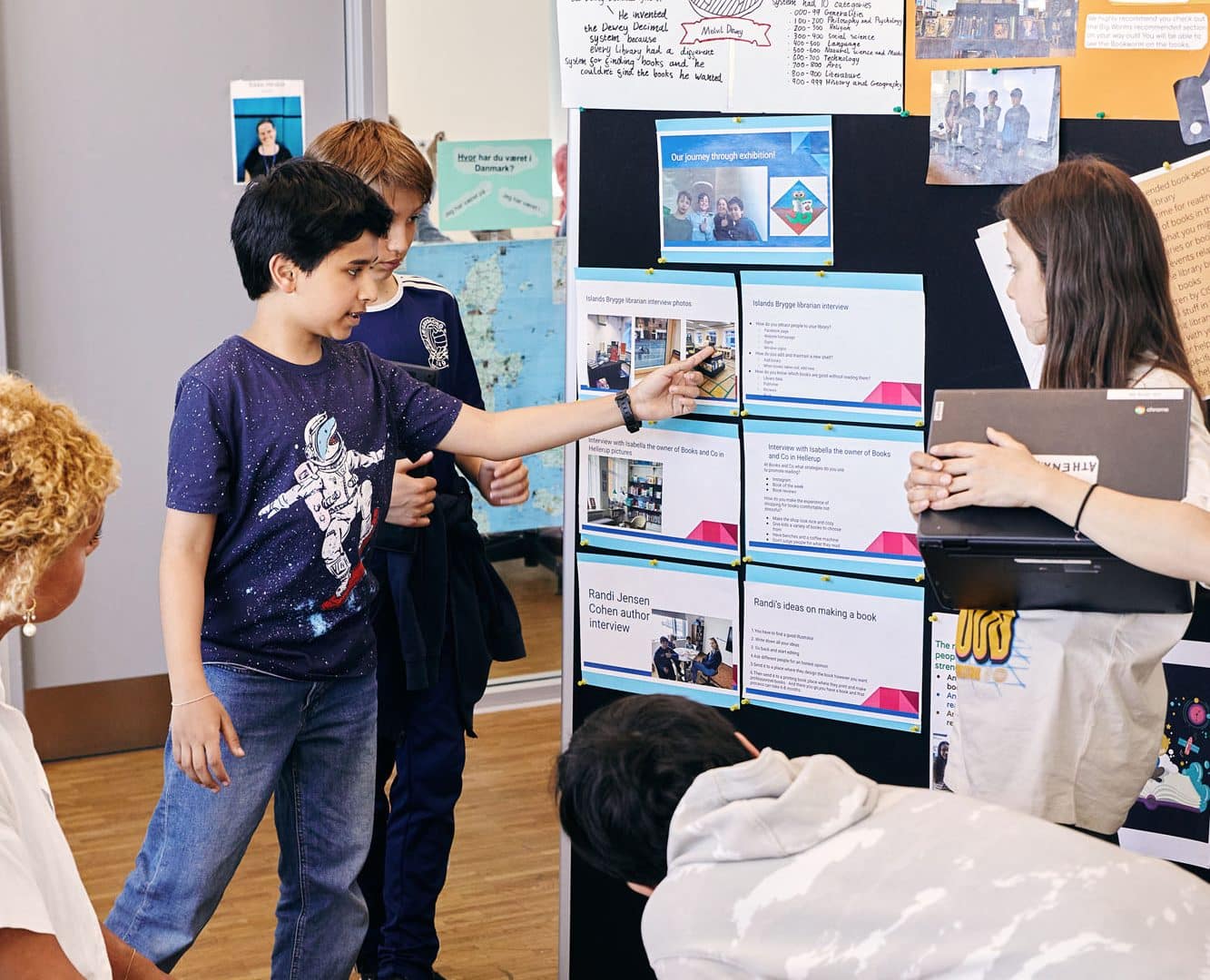
The PYP is an academically rigorous and challenging programme, with a unique approach to assessment. We do not grade students, as such, but rather create a culture of self assessment to inform and adjust future learning.
Students and parents are active agents in the assessment process in the PYP; we want both you and your child to understand who they are as learners, what success looks like, and – perhaps most importantly – what their next steps are.
Using this approach, learning is measured against individual developmental milestones, and at moments that are meaningful to the student.
From self-assessing to self-adjusting
By taking an active role in their own assessment, students are required to reflect critically on how they think and learn. It involves self-driven evaluation of knowledge and skills so that, in turn, students can make continuous adjustments and improvements in their learning.
As they reflect on their progress and set goals for future learning, we invite students to consider the following questions.
- What do I need to know?
- What knowledge and skills do I need to develop in order to answer my questions?
- What steps do I need to take to ensure that my learning exemplifies quality?
- What further possibilities do I see?
- How do I incorporate feedback to achieve my learning goals?
Co-constructing learning goals and success criteria
Students, parents and teachers set learning goals together to answer the questions “Where am I going in my learning?” and “What do I need to get there?”
Co-creating personal learning goals support the creation of high expectations by:
- making learning transparent to the teacher, the student and their families
- building a shared understanding of what learning is to be achieved
- encouraging reflection and focused feedback
- inviting students to take ownership of their own learning.
Standards, not grades
Each student on the PYP will follow a developmentally appropriate curriculum for their age. It will challenge and push them to think beyond subject silos, to instead consider learning holistically according to key approaches to learning (ATLs)
ATLs give children the skills to self-assess and self-adjust, and to reflect on their achievements. Our teachers will use explicit strategies to provide feedback and challenge so that, by the time a Unit of Inquiry is completed, students can clearly demonstrate not just what they have learned, but how it will inform the learning that is to come.