CIS Biology Conservation Trip 2023
Two Weeks in Sulawesi, Indonesia
A blog post written by CIS 10th & 11th graders
This year, for our CIS Biology Conservation Trip, we headed to Sulawesi, Indonesia for two weeks of exploration and data collection with Operation Wallacea. We were a group of sixteen 10th and 11th graders, accompanied by Ms. Wykes and Mr. Ferrari, along with professional scientists who helped us collect data from the surrounding nature.
In this blog post, we’ll outline our entire two weeks, from our time in the middle of the rainforest to our scuba diving adventures in Hoga Island Marine Station. We hope you enjoy!
Day 1&2 : Traveling from Copenhagen to Kendari
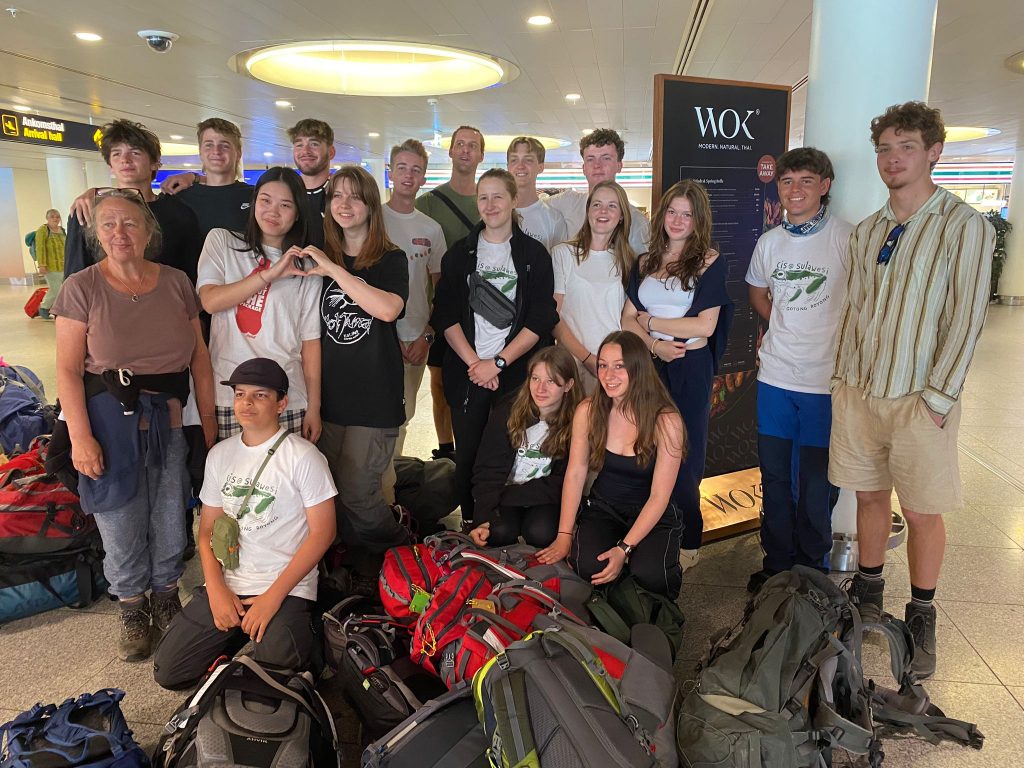
The trip to Sulawesi is long, and ours began with a six-hour flight from Copenhagen to Dubai. We arrived to Dubai around midnight local time and had lots of time to explore the airport as there was a delay in our flight. We were able to have some food and get some rest. At 5:00 we boarded our next flight to Jakarta, which would take eight hours.
Despite the long and exhausting travel day, the hotel which we were staying had a lovely pool where everyone relaxed and enjoyed themselves. This was followed by a delicious and (mostly) Indonesian dinner.
On Saturday, we headed to the airport bright and early for our third and final flight to Kendari. Here, we were met with a heavy rainstorm and many locals who wanted to take photos with us🤪. After arriving to the next hotel, we all enjoyed another Indonesian dinner, ice cream from McDonalds (promised by Ms. Wykes) and our last normal shower for quite some time.
—Reported by Abby and Josephine.
Day 3: More Travel to get to Buton
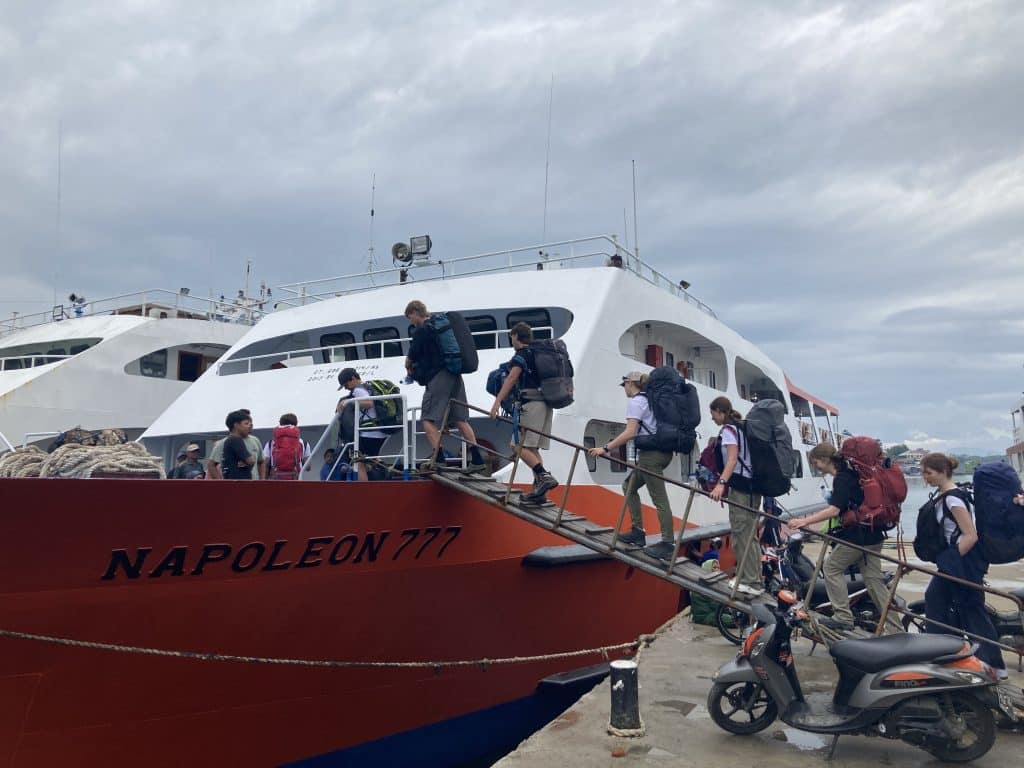
On day three, we woke up quite early for our boat ride to Buton. We left the hotel around 8:00 and boarded by 9:00. The boat was quite large and we all had cabins to put our bags in and get some sleep. The boat ride was meant to be four hours but that turned into five. The first few hours were good, but then it got very bumpy and many people were seasick. In general, a slightly unpleasant experience.
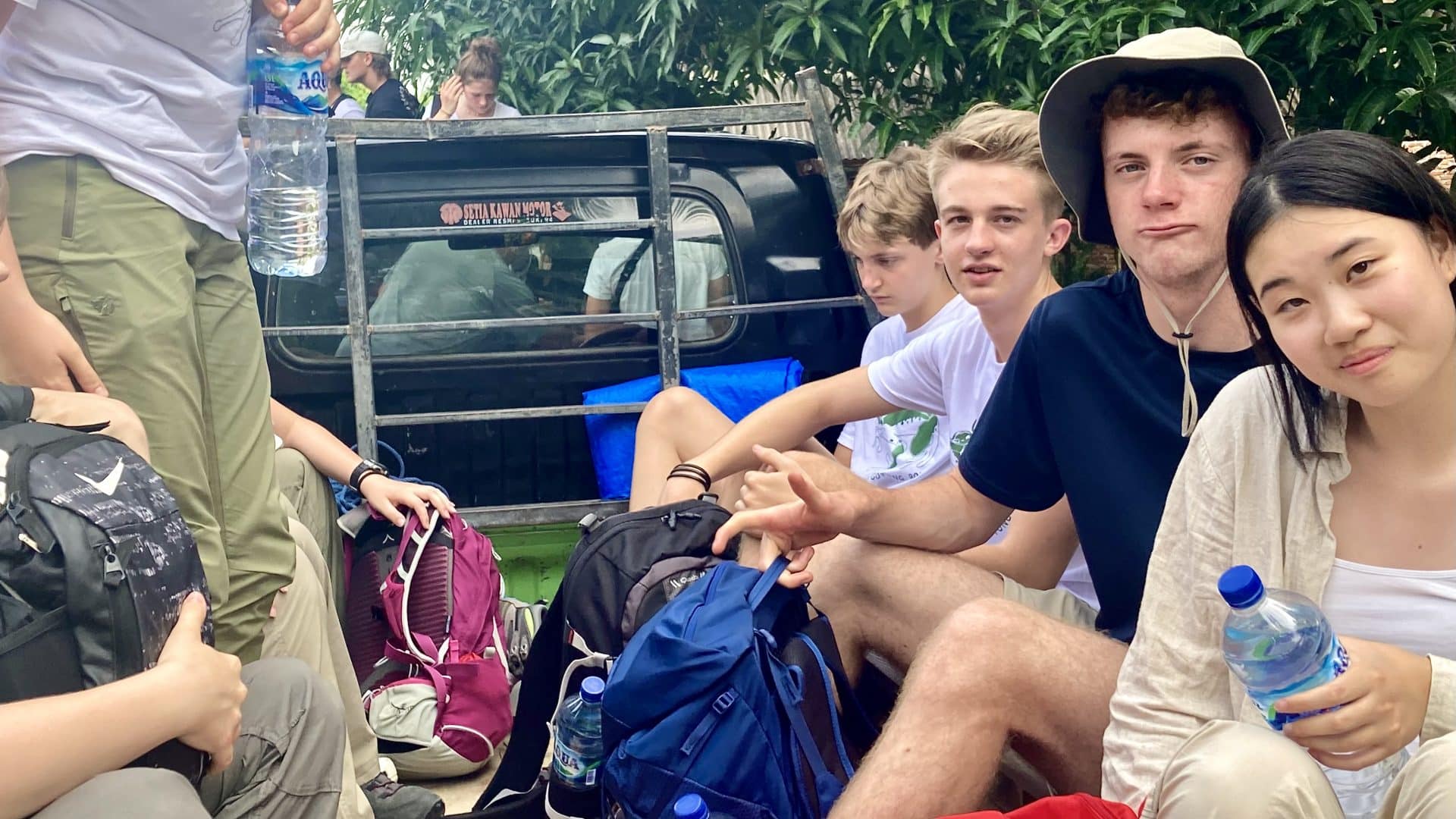
Once we arrived in Buton, we were all put into trucks with open backs that fit eight people each. We had a bumpy 30-minute ride to a house in which we had lunch and left our marine equipment. We then had another hour in the trucks and were dropped off thirty minutes from camp. During out 30-minute trek to the camp, we got muddy and crossed the nearby creek seven different times until we finally arrived at Camp Anoa.
Once we arrived, it was getting dark so we had a quick tour of the camp, got introduced to all the staff, and ate dinner. Afterwards we had a quick lecture about health and safety and rules then went to bed. We are all glad to finally have arrived and excited to begin 🤩.
—Reported by Tate.
Day 4: Our First Day Learning in the Rainforest
Today was our first day of surveys with the researchers at Anoa Camp in Sulawesi. We got separated into groups of four, in which we would be doing our surveys and attending lectures all week. This morning each group went to survey either birds (start time: 5am🥲), megafauna (6am), herps (7:30am) or butterflies (8am). During these surveys, we used techniques such as transect sampling, point and count, track spotting, pit-fall traps, mist netting and pollard walks to gather data about each animal group.
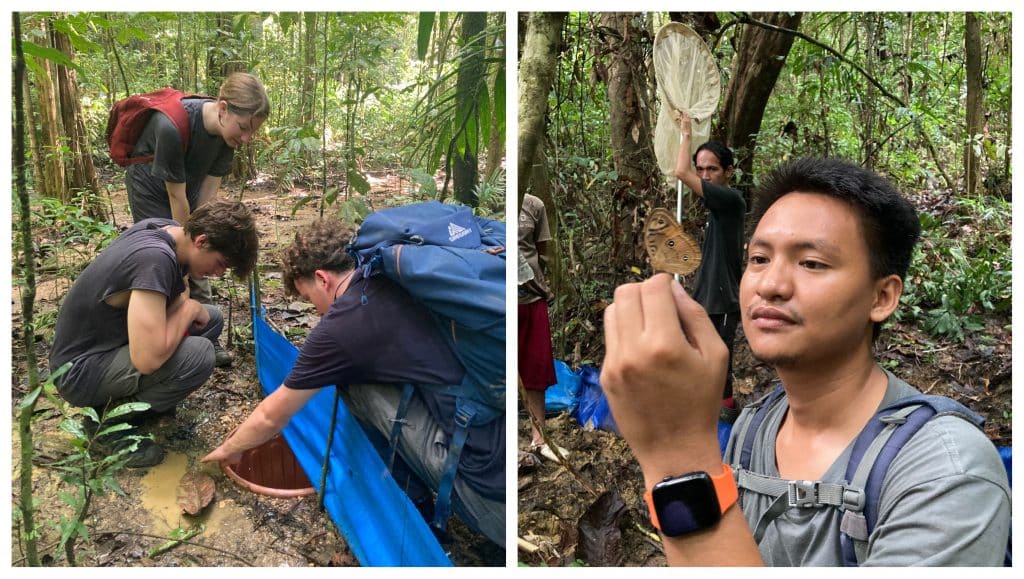
After lunch (and some downtime), each group split off into lectures and activities such as habitat survey or survival skills lesson. During the habitat sampling we created a quadrat (20mx20m) and surveyed the height of the undergrowth and tree circumference. During the survival skills lesson we were taught by our local guides how to create shelter, fire and a cup to boil water in, in case we were to ever get lost in the jungle.
Before dinner, all of us attended a lecture about monetising carbon as a way to help preserve biodiversity and large forests. After dinner, some groups continued their surveys on bats and nocturnal herps, using aforementioned techniques while the rest of us attended another lecture about invertebrates with a focus on butterflies and moths.
We all had a eventful day, so we were all exhausted and excited to shower, but looking forward to the next day’s activities (to some extent because we always come back exhausted and dirty!).
—Reported by Ema and Tate.
Day 5: Animal Surveys in the Rainforest
Today we carried on with our daily surveys (butterflies, herps, megafauna and birds). Many of the surveys took place on Transect 2, which is the hardest one here. It was tough, but we all survived. We heard hornbills and saw pig and anoa footprints.
In the evening, we had lectures about megafauna of the region. The camp’s megafauna expert, Arthur, claims the Anoa is the “sexiest mammal of Sulawesi.” Later in the night there was a bat survey and an optional tarsier walk. Two bats were found in Transect 7.
After a long day, we were all in need of rest in order to prepare for tomorrow’s activities.
—Reported by Ludi.
Day 6: Jungle Skills and Rainforest Structure
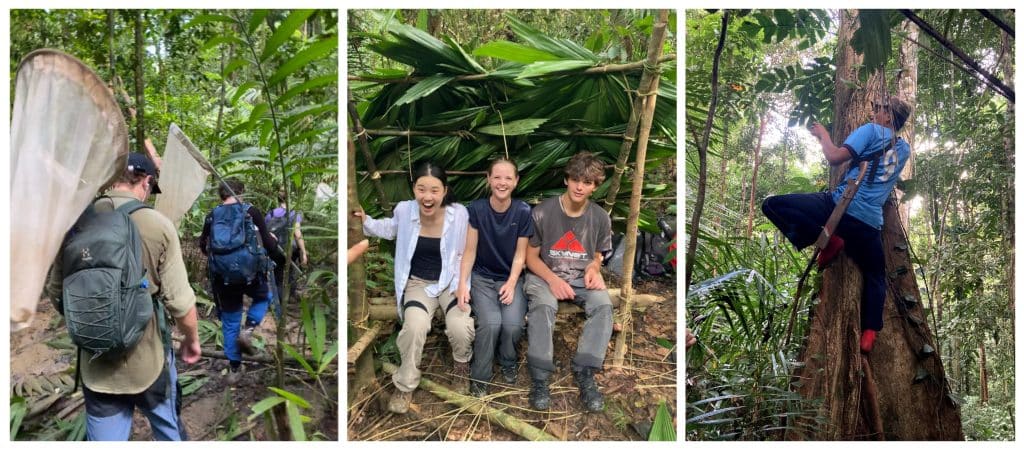
For two of our groups, “Jungle skills” started the day alongside habitat/structure of the forest. During our jungle skills session, we learned a variety of survival skills for the Indonesian rainforests. We started by brainstorming the most important things to consider if we ever got lost in the forest, then learned some skills for survival. Making a fire was first.
We were shown the technique for using two sticks as friction in order to create heat and then a flame. This was so cool to see. Building a shelter was next. With the guides’ help, we built a shelter using small logs and rattan (a thin vine) as string, then covered the roof with large palm leaves. It was incredible to see how fast we were able to construct a shelter that held the weight of four people and was waterproof from the rain (we experimented and it worked!).
Next we talked about food: what one should and shouldn’t eat in the forest. We were also shown how to trap animals using only the branches, sticks, and vines that the forest offers. Finally, we learned how to boil water using a leaf (yes, a leaf!); and while we watched it boil, we enjoyed a slice of cooked palm, which tasted like smoked asparagus.
For the other two groups, we went to map the structure of the forest for trees, saplings and seedlings. We constructed a quadrat based off of an origin point decided by our instructors. We assisted in the construction by using compasses and measuring tapes to determine the Northeast, Northwest, Southeast, and Southwest corners of the outer boundary of our quadrant. This took some trial and error as many of our group members were seemingly inexperienced with a compass.
We then divided the quadrant into four equal sectors. After completing this base structure, we began data collection on the abundance of trees, saplings and seedlings. We used a method to place a smaller square in the centre of each individual quadrant and noted the number of seedlings and saplings in each of the boundaries. We then measured the width of trees at 1.5 meters tall and, with the help of our instructors, noted the species of trees. We were challenged with measuring the width of a large tree with tall roots, meaning it was necessary for one of our instructors to amaze us with his ability to easily scale the tree (the width of the tree ended up being around 430 centimeters). We were only able to do this with the assistance of our native Indonesian instructor, Darwin. We were all impressed when by the end of this activity we found Ms. Wykes with a bracelet made of rattan, woven by an instructor.
After these tiring activities, some of our group members enjoyed an intense volleyball game against our Indonesian instructors and guides – of whom we beat two out of three matches. Then we ended the day, like many others, by playing a long round of Uno.
—Reported by Mr. Ferrari & Eva
Day 7: Transect Sampling in the Rainforest
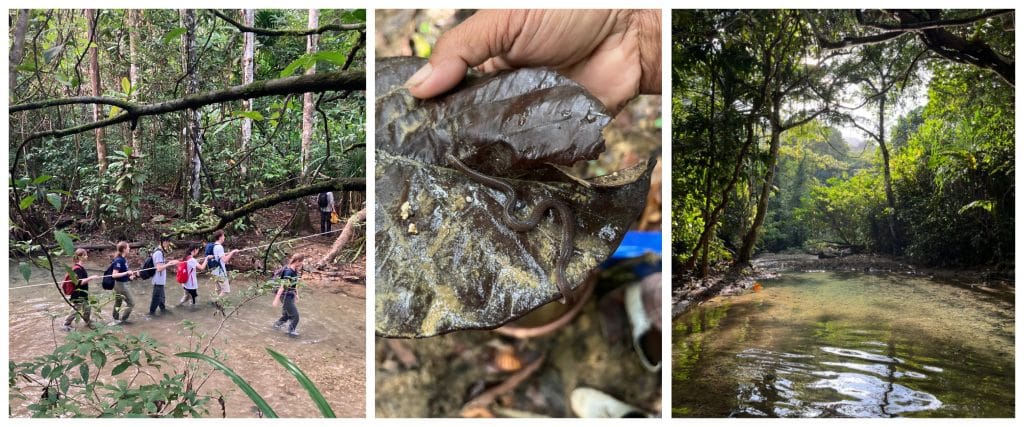
We started the day off with some amazing luck during our first transect line (herps) by picking up a snake in the first set of pitfall traps. Our amazing luck continued when we found yet another snake at the second set of pitfall traps. Some would say that the snakes were too small and could be considered worms, but we think they’re just a bit jealous that they didn’t share our luck when it comes to pitfall traps.
Our second activity was monitoring the carbon stored in trees. This was our second time doing this, so we knew exactly what to do. We managed to speed-run the activity while having a blast. The last part of our activity was joined by a new group member called Joseph. Joseph was a big fly that accompanied us on our journey through the forest. He was chill like that.
Arriving back at camp, we asked the camp director Celina if we could go for a swim in the river. She said we could, but we needed to get changed quickly because the forest guides would leave soon. Once we heard that information, we got changed in a flash.
Our guide David took us to the river, and without hesitation, we all jumped in. Later once we got in and refreshed ourselves, Sebastian made a plan to record a clip for the vlog on his GoPro. You we see the clip in this video. We left the river and changed in to dry clothes and relaxed for the rest of the day.
—Reported by Sebastian and Nikhil.
Day 8: Putting the “Rain” in Rainforest
This morning we woke up to a generous amount of rain. This led to the planned activities to be postponed/cancelled. It ended up being only the megafauna group that went ahead with transect 1(the one uphill). The group consisted of Joakim, Viktor, Seb and AJ. It was pretty tiring on the way up, but we endured the pain and suffering that the rain and conditions caused.
When we got up to the starting point of transect 1, our guide Arthur described and demonstrated different animal tracks and taught us how to spot them. We silently made our way down the transect, writing down all our findings and taking turns leading the group. When we arrived, it started pouring heavily and we ran back down the mountain at high speed. When we finally made it to camp, all our clothes and belongings were completely doused.
While we had gone on our activity, the rest of the team had been relaxing at camp. Due to the rain, animals were seeking shelter under the roofs and the other guys saw a snake in the dining area.
The rest of our day consisted of a lecture about herps and bats and time allocated for packing. We had a social event in the evening where we listened to music with the staff, had bracelets made of rattan, and many of us tried to start a fire using just sticks and string. A great way to end our time in the jungle.
—Reported by Joakim and Viktor.
Day 9: Travel Day to Wanci

Today was the day we’d all been longing for: the day we left the outdoor camp beds of the jungle for the luxury of a hotel with actual showers and Wi-Fi!
Like usual, it was another early start for us all, with a final jungle breakfast (yay), and goodbyes to our lovely Indonesian guides and camp staff. Then it was time to trek through the rivers and mud out of the jungle camp. We got into two small trucks, and drove about an hour back to the main village of Ereke, where we repacked our bags and ate a delicious lunch of rice, noodles, soup, tempeh, vegetables and (for the first time in a week) chicken!
After our previous bumpy boat ride, we were all quite apprehensive to get on another ferry towards Wanci; but in reality, the ride was much smoother this time around and we spent it resting, playing games, and watching the sea. It was beautiful to arrive to Wanci as the sun was setting and the stars and moon began to shine in the clear skies above.
We arrived at the hotel, went for dinner by the sea (nasi goreng and melon juice), then everyone enjoyed some time on the Wi-Fi, calling parents and reconnecting with friends. It had been a full week without any contact with the outside world, which was both a challenging and eye-opening experience for all. We all enjoyed our first actual showers in a week (prior to this we’d been using a giant bucket of river water, with a scoop); and for many of us, it was also the first time we’d seen our reflection in the mirror for a week—a funny feeling. Sleeping in a real bed, with air conditioning and without spiders, ants and centipedes was an absolute treat for all!
Day 10: Wanci to Hoga
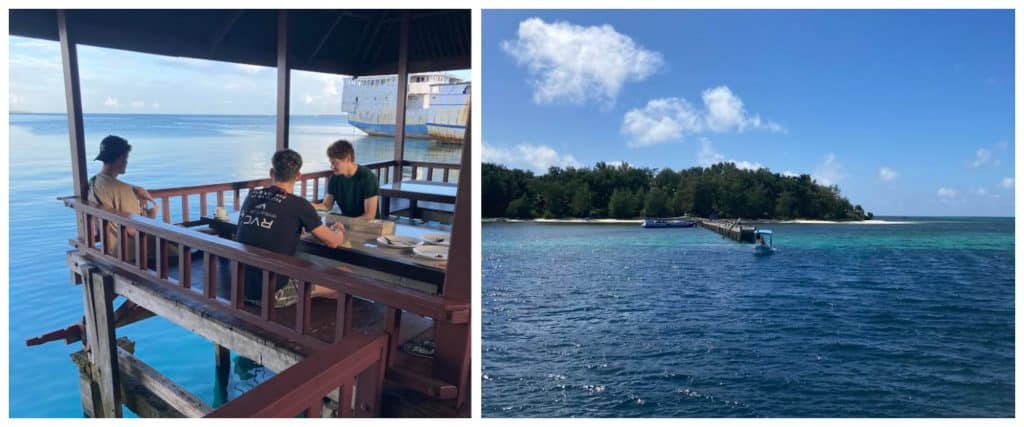
Today was yet another travel day for the gang. We woke up in the hotel and had a delectable breakfast of rice and squid, and right after we departed for the harbour for a wonderful trip on the top of a large wooden boat. We were able to lay on the roof and absorb sun for the first time this trip, and somehow no one really got sunburned which was impressive. The trip was relaxing and a good way to start off our second week after our muddy jungle affair. When we finally arrived at the island, we thought we were dreaming or that the sun had set up a hallucination. The best way to describe it would be the Coldplay song “Paradise”, as it was indeed a paradise. After the amazing and sunny start, yet another delectable meal was served for lunch: rice, fried noodles with garlic, coleslaw, veggies, fried eggs, and a delicious coconut drink. We munched like never before.
We were treated with a ‘brief presentation’ which lasted over an hour including our housing situation, safety and plans for the day. We then cooled off by heading to our bungalows which can only be described as 5-star in comparison to the jungle; however, we still have to deal with bucket showers and squatting toilets. After dropping our bags in the houses, we headed for the dive centre for our first taste of Indonesian oceans.
We were split up into our groups: learning divers, referral divers and qualified divers, and were introduced to our own instructors and dive masters. We then headed for the waters as we collected our snorkel gear to get a relaxing start to our diving week and see the dazzling coral reefs and snazzy reef life. We were on the snorkeling trip and it was great: Ms. Wykes and her explosive enthusiasm, Mr. Ferrari and his fear of the sea snakes, and our instructor Hayden and his impressive duck diving.
Finally, we had our scrumptious dining session; consisting of rice again :), but also a delicious tuna and coleslaw. Overall the food was amazing after our week of suffering with plain rice in the jungle. We were also introduced to the kiosk, where we would be using all of our millions on Pringles, Oreo’s, and cold soft drinks.
— Reported by August and Mathias.
Day 11: Hoga Island
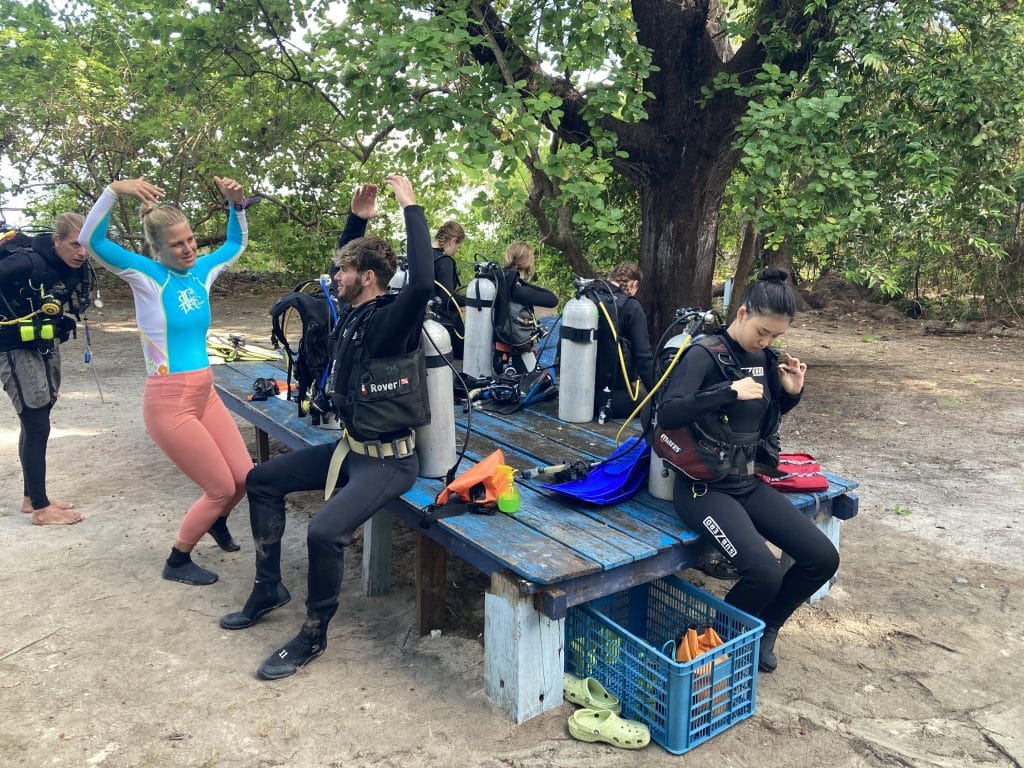
Day one in Hoga babyyy, and we couldn’t have been more excited for the trip. As a member of the referral team, group E, it was straight to diving from the get go. Before the dive however some basic review of what we had covered in the confined water dives in Denmark. Once kitted up from the dive centre and onto the dive boats, we headed towards the shallows for skills practice before heading to the deeper underwater platforms.
Being our first dive of the trip, we didn’t start the open water course, but instead did a refresher dive before checking off the skills towards obtaining our PADI certification. We started in the shallows, doing preparation activities, then moved on the platform to start learning the skills which we would work through during the four open water dives in the days to come.
After two good dives and a few lectures on reef ecology, the day had come to an end and set a hard benchmark to beat for the trip in the days to come.
—Reported by Nikhil
Day 12: Learning and Diving on Hoga Island
Today, Guille and I were able to wake up later due to the fact that our first lecture was at 9, so we ended up waking up at around 8. As we woke up, AJ came to greet us and we walked to the dining hall together and had bread with jam and porridge. The first lecture of the day was about the coral types and their reproduction, then we had our dive two of four directly after. It was really nice as we went 12 meters deep and it was the first time I think most people in the group had ever been so deep in the water. Also the scenery was beautiful with damsel fish and clown fish everywhere.
The second part of the day began with a lecture about mangroves, as the already certified divers were going there in the afternoon, and afterwards we rushed to the dive shop to prepare for the second and last dive of the day. As a group, we prepared our gear relatively quickly and got on cumi cumi (one of the dive boats) and headed to the 7-meter diving platform where we would start with performing some skills. It only got interesting after though because we went on an actual dive going down to 18 meters. It was really great and the whole group very much enjoyed it. We dove around a coral reef wall which was practically vertical and had a bunch of small fish living in it. On the dive there were also some lionfish, sting rays, and two big jobfish which came charging at me, but luckily they stopped. All around, the dive was really nice and successful.
The last part of the day was good, starting with a good diner of rice, tuna, salads and tempeh, then we went to our last lecture on identifying fish. it was fine; but since a lot of the information wasn’t new to me, I tried hard not to fall asleep. It was a long day!
—Reported by Skip.
Day 13: Fish Identification in the Waters of Hoga Island
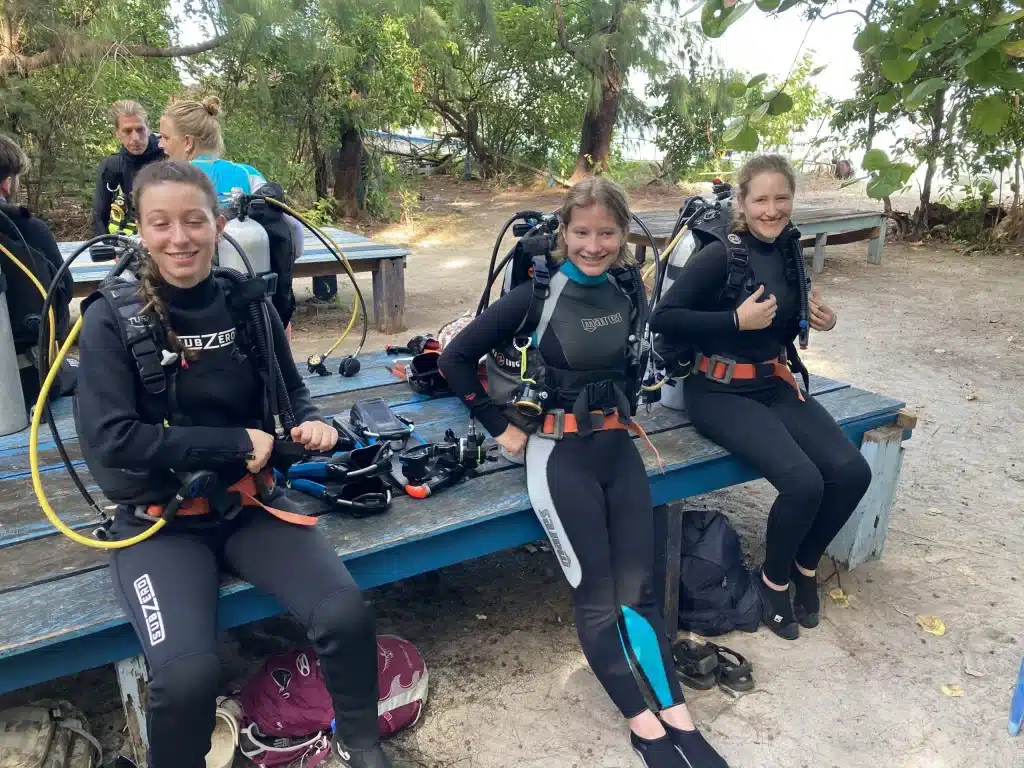
Today was another jam-packed day of learning and diving for all. Those learning to dive got the chance to try out some open water diving for the first time and practice their skills deeper than before. They also practiced their dive theory with a practice exam. The referral group are now all qualified divers and got the chance to do their first “fun dive” as qualified divers —with their wonderful dive instructor, Frankie. All of the students were very happy to be certified open water divers.
The “fun dive” took them along one of the large reef walls, where they spotted a wide array of colourful fish, coral, a barracuda, a lion fish and even a turtle! The already certified group did two dives today: the first where they laid 10m transects along the sea floor and used 50cm quadrants to measure the percentage of reef coverage to look at the overall health of the reef.
After our fish identification lectures, we were ready to put the knowledge into practice. Our next dive was all about spotting different fish species. The dive took us along the same giant reef wall as the referral group (passing them and high-fiving along the way). Looking up the reef wall is an incredible sight, it must be 15 meters tall and while diving, it’s like floating through space in another world. Really amazing. This group saw so much marine life: many sting rays, hundreds of fish, sea cucumbers, a lobster, and TWO turtles. Such a cool afternoon of diving for all.
After getting out of the water, everyone freshened up, and half of the group ended up in the usual late afternoon spot, watching the sunset on the beach. We talked about how much we enjoyed the island life, and how we could make experiences like this more of a reality in the future. Dinner was again a delightful mix of local food, with a delicious pineapple salad, alongside the usual buffet, with some fresh watermelon for dessert.
—Reported by Ms. Wykes.
Day 14: Beach Cleanup and more Diving
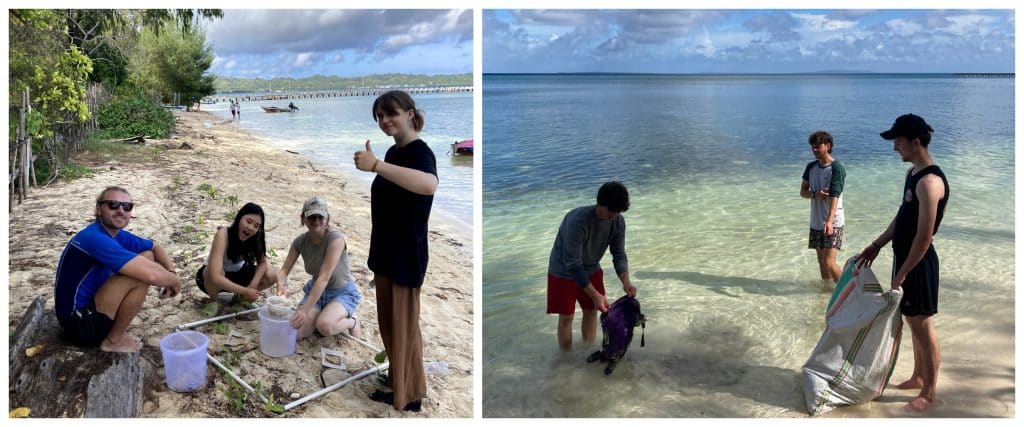
Today was the Indonesian public holiday of Idul Adha. Many locals came to Hoga on their boats to celebrate the holiday. We woke up early to survey microplastics on our beach while doing a beach clean up with Frankie, one of our diving instructors. Children from neighbouring villages and islands came to celebrate the holiday and were intrigued by our clean up crew. They were all very curious and eager to help us pick up any plastic that they found along the beach and filled up two whole bags! During our cleanup we found trash such as bottle caps, sandals, straws, cups and even a few chairs. Even after filling six large bags full of plastic, we barely made a dent into the pollution occupying the beaches of Hoga Island.
After our beach cleanup, we all got ready for our first dive of the day. The referral and advanced diver groups boarded a large boat that took us to a dive site further from Hoga, while the open water group continued on with their skill training.
Our referral group of divers got to put their skills into action when an unexpected emergency occurred. At 15.5 metres under water, one diver experienced a tear in their BCD tube, which caused air to escape at a high rate. Calmly, he alerted the diving instructor who provided him with his alternate air source and they were able to ascend safely. All onlooking divers remained calm and completed their emergency ascent as well as their 3-minute safety stop at 5 meters. After resurfacing, everyone returned safely onto the boat and waited for the advanced group to finish up their dive.
After a filling lunch, all groups had their second dive. The advanced open water and referral divers went separately on “fun dives,” while the beginner divers completed their third open water dive.
Some of today’s sightings included: blue-spotted stingray, garden eels, (black and white snake)
—Reported by Ema and Ludi.
Day 15: Dive Certifications & Sampela Village Tour
Our final day on Hoga Island began bright and early at 5:30 to get ready for our final dive of the week. Group D did their final open water dive where they became qualified divers afterwards😎😶🌫️🐠 .Group E and F did a fun dive exploring the reef one last time, and the advanced divers did a navigation dive to complete their advanced open water course!
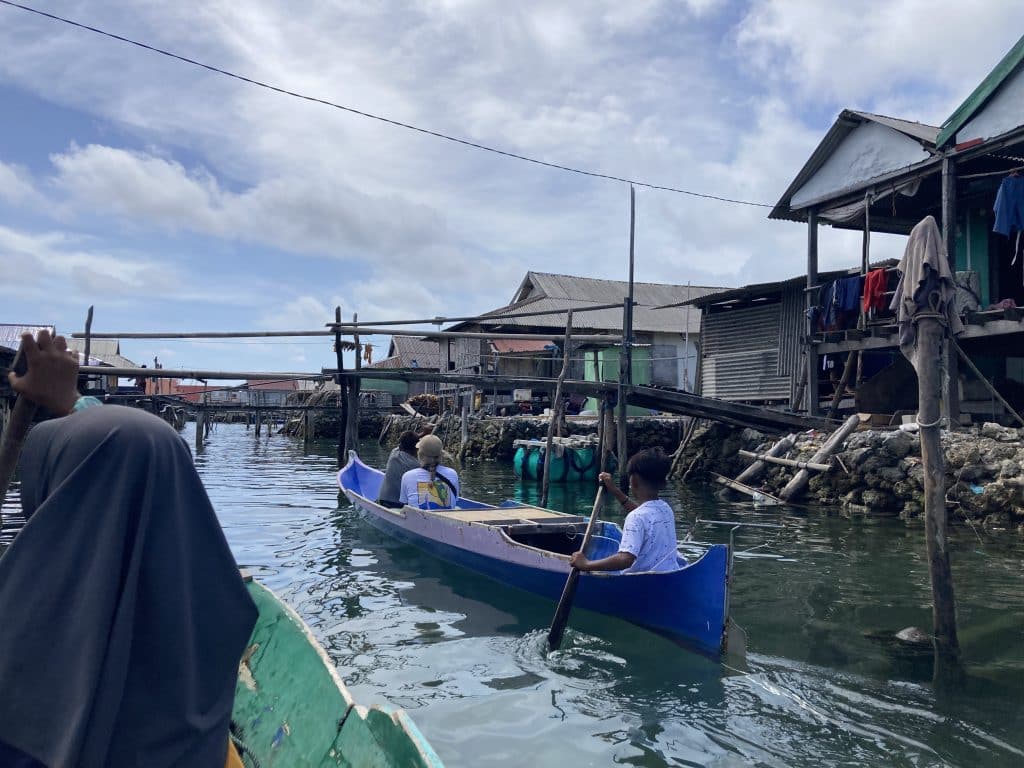
After an exciting morning in the water, we made our way to a nearby village called Sampela. This village is completely built on stilts in the water and hosts around 4,000 individuals. Here, we were met by excited local children who gave us a tour of the village in their homemade canoes (this was a very wobbly experience). After the tour, very talented locals did henna on most of our hands (and AJ’s neck) while we drank their coconut water. This was a very unique and touching experience.
The afternoon was spent packing bags and taking naps on the porches. Later in the evening, we enjoyed our last dinner on the beach with all the dive instructors and the other university students for social night. We had a yummy dinner followed by a lovely fire on the beach after dark.
—Reported by Abby & Josephine.
Day 16: Hoga Island to Jakarta
Today was our first day of our long trip home. The day began with an early start, getting up at 4am for our boat that left at 5:30. This boat was very full and very warm, but thankfully only lasted around an hour. We then had another boat ride to get us to Buton, then a 45-minute car trip to reach Baubau. The airport in Baubau was unique to say the least as there was only one gate and the plane showed up 10 minutes before we left. Then we spent some time at Makassar airport where we rediscovered western food in Starbucks and Dunkin’ Donuts. After another plane ride, we finally arrived in Jakarta after 16 hours of travel.
After arriving at Jakarta, we were transported to the FM7 resort around 8 pm. After checking in, we grabbed a dinner with mixed “western” and Indonesian food. Everybody was thankful for the switch in diet as it was the first meal without rice in two weeks. Afterwards we made our way back into our respective rooms, where we had our first proper warm shower and cleaned up all wounds/mosquito bites that were gained during the trip. After calling parents and talking to friends, we went to sleep for a late morning the day after.
—Reported by Joakim and Viktor.
Well, that’s it. (Besides a boring Day 17, which was just us making our way back to Copenhagen.) We hope you enjoyed gaining some insight into what it was like going on the CIS Biology Conservation Trip with Operation Wallacea!
Now that you have read the blog post about our biology conservation trip to Sulawesi, Indonesia, you might be curious to learn (or see!) the video blog. Students on the expedition compiled their footage of the trip which was then edited and produced into a video by student Marbella Duricko with the voiceover and script by student Tate Moreau.


